

SUMMARY: True Overland Travel Costs
- Total spent: €78,341.87
- Average per month: €1,187
- Average per person per day: €19.52
- Covers: travel-related expenses (vehicle, fuel, food, internet, visas/permits, maintenance, accommodation, activities)
- Not included: home base costs, taxes, mandatory health insurance and long-term savings/investing
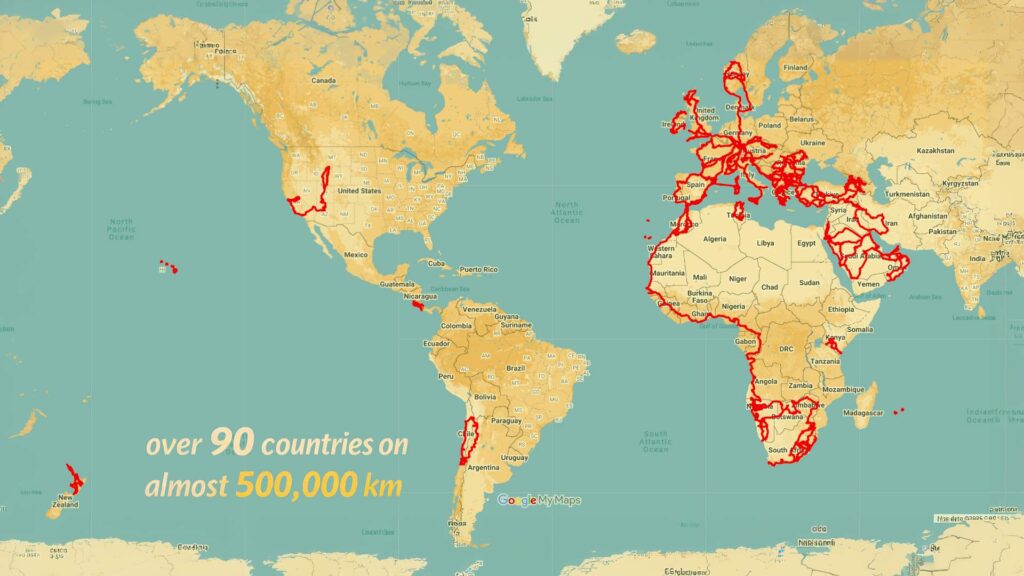
Hey travelers from around the world – Fenny and Totti here.
Even though we have traveled to more than 90 countries since 1997 – as shown on the map above – during our 5+ year long-term journey we covered 119,066 km across 47 countries.
And now – after such a long time on the road – we feel it’s time to take a sober look at the financial side of long-term travel.
Countries we covered so far within this 5,5 years:
Germany, Austria, Italy w. Sicily and Sardinia, Hungary, Romania, Serbia, North Macedonia, Kosovo, Albania, Bulgaria, Greece, Turkey, Georgia, Armenia, Kurdistan, Iran, Iraq, Kuwait, Saudi Arabia, Bahrain, United Arab Emirates, Oman, Jordan, Moldova, Transnistria, Tunisia, Spain, Morocco, Mauritania, Senegal, Gambia, Guinea, Ivory Coast, Ghana, Togo, Benin, Nigeria, Cameroon, Republic of the Congo, Democratic Republic of Congo, Angola, Namibia, Botswana, Zimbabwe, South Africa, Lesotho, Eswatini.
WHAT DOES A LONG-TERM TRAVEL JOURNEY OR A WORLD TRIP ACTUALLY COST? – 66 MONTHS LATER
Back in 2020, we made the decision to leave everything behind. We sold all our belongings and invested the money in the stock market – without knowing if the plan would work out or what such a journey would really cost in the end.
Using the proceeds from selling our vehicles, we bought a Sprinter 903 4×4, converted it and set off after just 42 days. Originally, two years were planned. Two turned into five and five eventually turned into something open-ended.
We are overlanders and we travel in a very cost-conscious way, following a simple principle: “the less money we spend, the longer we can stay on the road”. We no longer work on a regular basis – only occasionally, when necessary.
Our philosophy is free travel, free camping and free living. We do not avoid hotels or campsites mainly for financial reasons, but because we simply sleep better and prefer living in our own vehicle.
Living cost-consciously has always been part of our lives. Even when we earned good money, we never lived beyond our means. Downsizing therefore came naturally to us. We are perfectly happy wearing second-hand clothes, buying used items or picking things up from the roadside, as long as they are still functional. Recycling or up-cycling – however you wanna call it – is something we genuinely enjoy.
We prefer to spend our money on diesel, on our vehicle and yes – this needs to be mentioned because it is a significant cost factor: we also smoke.
From time to time, a new camera, a laptop or other nerd gadgets are part of our lives and something we do not want to give up. Tourist hotspots, on the other hand, are not our priority. We are far more interested in places that are unknown or rarely visited.
Inside our van, we do not aim for a strictly minimalist lifestyle. A TV is part of it just like a stereo system, a shower with a instant water heater, a diesel heater, a large fridge, proper cooking and washing facilities and sufficient electrical power. Comfort matters to us, but luxury does not.
We do not drive routes twice. Our journeys are planned carefully. Not out of fear or excessive caution, but because we enjoy planning and want to travel efficiently. Detours cost diesel and wear parts – both of which we consciously try to avoid.
We do not eat out every day. Fenny bakes excellent bread, cooks a great goulash and her ribs are simply outstanding. Restaurants are rather rare for us, but we do enjoy finger food and street food from time to time.
So now you know us and our way of traveling. Pure luxury is not our thing, but we also do not travel on the absolute edge.
If you recognize yourself in this approach, you will likely relate much better to our costs than someone, who travels with an overlanding rig, but stays in hotels every night or visits every single attraction. Both approaches are perfectly legitimate – just not ours.
Let’s get started – The journey through our costs.
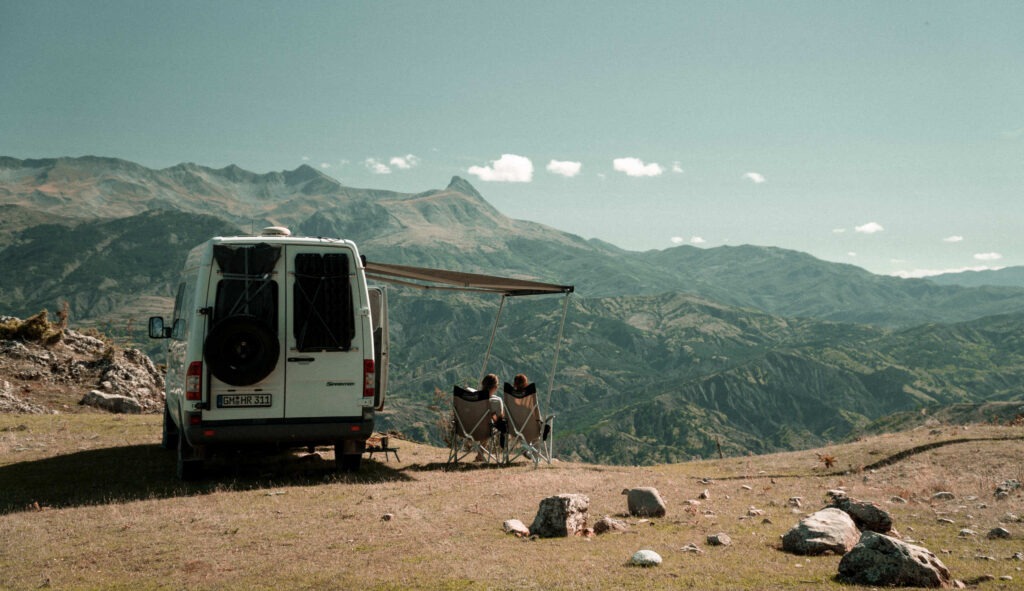
Pure FACTS:
The following costs do not include fixed expenses (such as taxes, insurances, etc.) as these vary greatly from traveler to traveler. Over the course of the past five years we have gradually disconnected ourselves from Germany, closed our company and reduced the associated costs. Around a year ago we also fully deregistered our vehicle, meaning there are currently no vehicle taxes or insurance costs.
We finance our travels entirely on our own through savings, that generate returns and dividends as well as through passive income streams. These cover a large portion of our expenses while also helping us stay below taxable thresholds, which are relatively high in our case. We consistently aim to remain below these limits and generally succeed in doing so. That said, we are still officially registered in Germany.
In the following section we are talking strictly about travel-related costs. So no “luxury” items included.
(Luxury items such as laptop, 2 smartphones, 2 Mini PCs, camera equipment, mobile power station, a canoe, a drone and other electronic devices, as well as less typical expenses like festival visits, amount to roughly €10,000 for us.)
Included Costs:
Fuel (Diesel)
Vehicle maintenance, repairs & spare parts
Accommodation (camping, lodges, hotels when used)
Food and Groceries
Restaurants and Street Food
National Parks and Sightseeing Fees
Visas and Border-related costs
Communication and Internet (SIM cards, Starlink)
Miscellaneous daily expenses
Cigarettes
PCR Tests
BRIBES? WE NEVER PAID EVEN ONE CENT!
And to keep it short for the impatient:
Overland Travel Costs After 66 Months (Total + Averages)
€78,341.87
Per year: ø 14.243,98Per month: ø €1.186,39Per person/ per day: ø €19,50
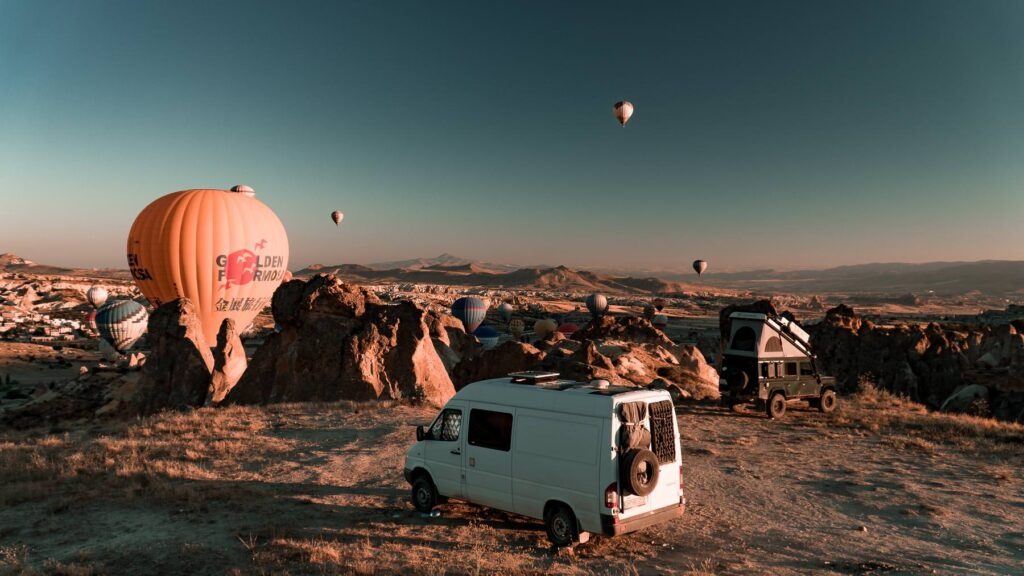
Let’s Go More Into Detail
On a journey like this some costs are simply unavoidable. Diesel is, of course, the biggest factor – the more you drive, the more you pay. Workshops and repairs are part of the deal as well. Every vehicle breaks down at some point, usually sooner rather than later. The more off-road you drive, the more often you will find yourself in a workshop. Visas have to be paid for, borders are not free and on top of all that we still need to eat, live and get from one day to the next.
But hey… take a look at the numbers and see how much money you could save by not smoking. Let that sink in for a second 😁.
| Vehicle Costs (jump directly to the breakdown) | 20,389.51€ |
| Miscellaneous (jump directly to the breakdown) | 15,897.33€ |
| Food (jump directly to the breakdown) | 14,991.99€ |
| Diesel | 11,369.33€ |
| Cigarettes | 11,087.73€ |
| Internet & Communication | 2,473.42€ |
| Accommodation | 1,085.90€ |
| Entrance Fees & Sightseeing | 1,046.66€ |
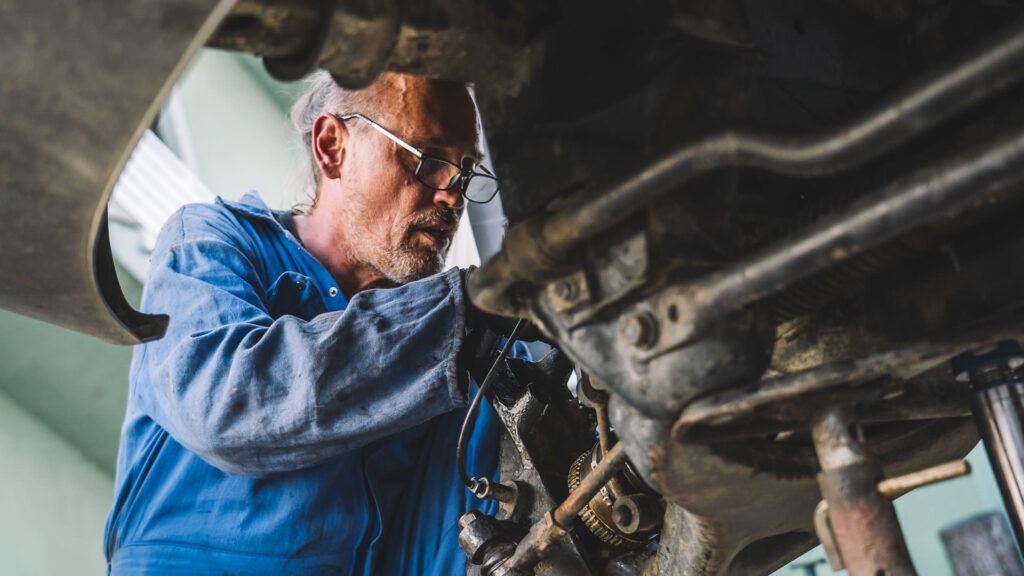
Vehicle Costs Breakdown
| Spare parts¹ | 7,285.57€ |
| Workshops² | 6,111.07€ |
| Maintenance³ | 2,495.99€ |
| Ferries | 1,387.57€ |
| Insurance | 1,005.11€ |
| TIP (Temporary Import Permit) | 512.95€ |
| Toll roads | 437.34€ |
| Spare Parts Shipping | 427.80€ |
| Carnet De Passage | 350.00€ |
| Fees | 156.90€ |
| Car wash | 153.78€ |
| Parking | 53.49€ |
| Rest | 11.94€ |
Go back to the Overview
¹Items we purchased and stored for later use.
²Over time we have drastically reduced these costs as, we now do most of the work ourselves.
³Operating fluids, tires and tools, that I did not previously have.

Miscellaneous Costs Breakdown
| Health¹ | 5.308,46€ |
| Visa | 3.974,67€ |
| Hardware Stores | 2.750,61€ |
| Shipping/Transport Of Goods | 1.576,66€ |
| PCR Tests (only during COVID) | 803,99€ |
| Cash / Banking or Exchange Fees | 781,13€ |
| Tips and gifts | 370,88€ |
| Clothes | 366,71€ |
| New Passports | 323,90€ |
| Solarmoduls | 329,07€ |
| Gas | 258,92€ |
| Washing Clothes | 218,54€ |
| Copyshops | 48,07€ |
| Rest | 51.39€ |
Go back to the Overview
¹ Health also includes a portion of our health insurance costs, which would normally fall under fixed expenses, therefore the total amount here is higher.
Food Costs Breakdown
| Food, Groceries etc | 12.513,47 € |
| Restaurants, Street Food | 2478,52 € |
Go back to the Overview

Want MORE? Here We go:
Our five-year journey can be divided into several distinct phases: Europe, Asia, the Middle East and Africa, for instance. Each continent, each region and each individual country comes with its own financial challenges. What is cheap in one region can quickly become expensive in another and planning assumptions often need to be adjusted along the way.
While travel in and around Europe was still relatively affordable, the sheer costs in Africa can really knock the wind out of you.
So let’s break down the regional costs in a bit more detail.
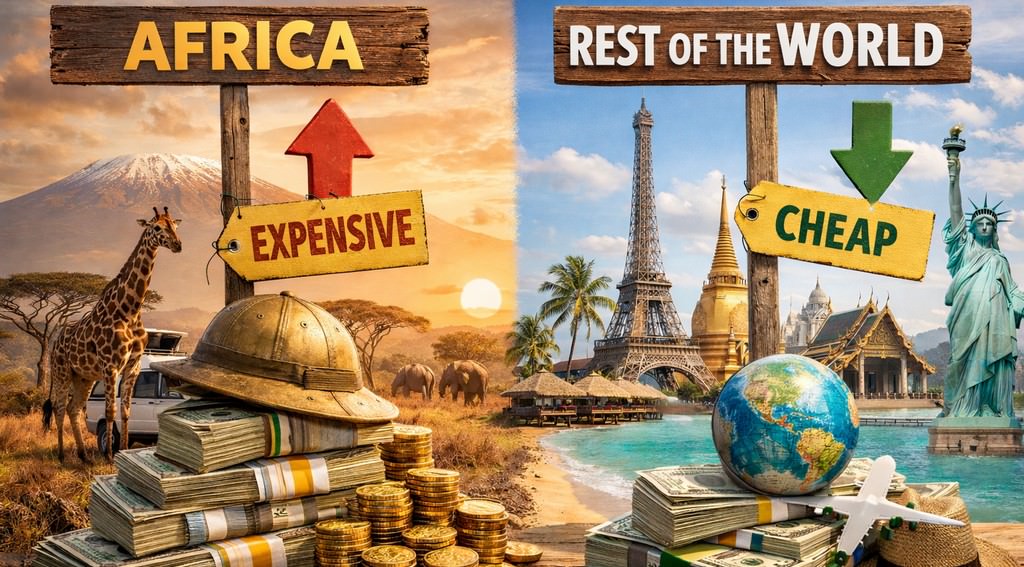
Anyone who assumes that Africa is a cheap continent to travel through, is seriously mistaken. Africa has the lowest average purchasing power and GDP per capita of all continents, yet for long-term travelers and overlanders it often turns out to be one of the most expensive regions. High border and visa costs, challenging logistics, vehicle wear and limited infrastructure, quickly drive expenses far beyond expectations. Not even touching on the cost of living yet
And to keep it short again for all the impatient:
Costs broken down per region, per year:
Asia
€10.555,80Per month: ø €879,65Per person/ per day: ø €14,46
From Turkey to Iran. Spareparts, as well as food and internet is quite inexpensive. Sometimes we only had 350€ per month.
Middle East
€12.501,25Per month: ø €1.041Per person/ per day: ø €17,12In Saudi Arabia visas were very expensive, while diesel was almost free. Cigarettes were extremely cheap in Kuwait but expensive in Oman. Spare parts were often unavailable, so we had to order and ship them from Germany.
All in all, the Arabian Peninsula is not cheap, but it is also not excessively expensive if you set clear limits. Without those limits, this part of the journey can easily become costly as well.
Europe
€14.092,65Per month: ø €1.174,38Per person/ per day: ø €19,30Some countries in Europe are extremely affordable, such as Bulgaria, while others are rather expensive, Greece among them. Overall, prices were largely what we were used to.
Africa
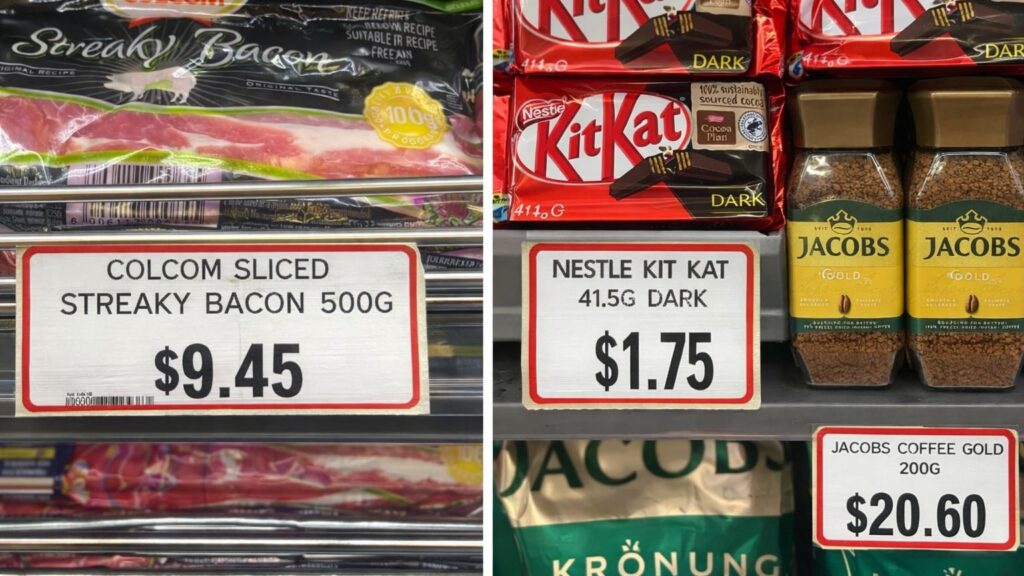
€15.019,75Per month: ø €1.251,64Per person/ per day: ø €20,57Africa surprised us. Not because visas were sometimes very expensive – we expected that – but because of the often outrageous food prices. And we are not talking about “prices for white people”, because in supermarkets prices are the same for everyone. Coffee, chocolate and meat were extremely expensive, often five times higher or more than what we were used to.
Diesel was cheaper than in our home regions, but still relatively costly overall. Spare parts are prohibitively expensive if bought new and Africa is by far the most customs-intensive continent, when it comes to imports. Shipping often feels like it has to be paid for with a kidney.
Southern Africa improves in some respects, but there accommodation- and attraction costs start to hit hard(er).
Some fun facts from the road:
Out of the total €1,085.90 we spent on accommodation, €701.79 alone was spent in Africa.
We always avoided and never paid bribes. We do not know, how we managed that, but read here, why.
During nearly 40,000 km across the Middle East we burned 5,380.44 liters of diesel and paid just €2,028.22 for it. That comes down to an average of €0.37 per liter – numbers that still make Europeans blink twice.
All visas combined cost us €3,974.67, with a solid 62.24% of that spent on the West Africa route alone.
Asia turned out to be the cheapest region when it came to internet access – fast, reliable and surprisingly affordable.
And then there was Oman. We pushed our cost optimization a little too far and drove two detours of roughly 1,300 km each to Kuwait to “optimize🤷♀️😂” cigarette prices. Diesel in Saudi Arabia was around €0.16 per liter, while cigarettes in Oman and the UAE were painfully expensive. Not so in Kuwait. Here there cigarettes were amazingly cheap. The result: roughly €1,300 saved – and a strong case study in questionable financial life choices😂.

All in all, we can say that we probably travel less expensively than most – or at least a large part – of long-term travelers. Back when we started, we didn’t really worry about what traveling would cost, but in the back of our minds were always the prices from our old travel style: flights, hotels, rental cars and all that.
Almost every country surprised us – sometimes very positively, sometimes quite the opposite. For us and our way of traveling, it turned out that this is something we can comfortably sustain for quite a while.
Our goal? To keep traveling until God himself comes to pick us up.
Will it work? Let’s talk about that again in 30 years – and if you happen to find us sleeping under a bridge before then, feel free to leave a coin or a slice of bread 😉
Yours,
Totti & Fenny
ohhhhh… PS: If you feel any information is missing or if you have questions, wishes or suggestions, feel free to leave a comment. Much appreciated 🙂
FAQ
How much of the total cost was unavoidable?
A large part of our total expenses was unavoidable. Fuel scales directly with distance, vehicle wear and repairs are inevitable on long routes and bad roads and border related costs such as visas and permits are fixed by authorities. Basic food and reliable internet access are also non-negotiable on a multi-year trip. Taken together these categories account for roughly two thirds of our total spending.
Some costs were only partially avoidable. Accommodation, activities and food choices offer room for savings but always come with trade-offs in comfort, safety or experience. Route planning can reduce border and permit costs but only by limiting where and how you travel.
A smaller share was clearly avoidable. Cigarettes and a few comfort-driven decisions could have been cut without changing the nature of the journey. In realistic terms this would not have reduced the total budget dramatically. The idea that a trip like this can be done for half the money usually implies fewer kilometers, fewer countries or a fundamentally different way of traveling.
How strongly do vehicle age and condition influence long-term overland costs?
Vehicle age and condition have a significant impact on long-term overland costs but not in the simplistic way often suggested. A newer vehicle reduces the risk of early breakdowns and unexpected failures but comes with higher acquisition costs, more complex systems and often limited repair options outside developed markets.
An older vehicle increases the likelihood of repairs over time but offers two practical advantages: lower purchase price and higher repairability. Mechanical systems are easier to diagnose, spare parts are more widely available and many problems can be fixed locally rather than requiring specialized workshops.
Based on many years of experience with both new and old vehicles we clearly prefer older models but not extremely old ones. Vehicles from a generation before heavy electronics tend to offer the best balance between robustness, serviceability and parts availability without the drawbacks of very old technology.
In the long run costs tend to converge. Newer vehicles shift expenses toward depreciation and specialized repairs, while older vehicles shift them toward maintenance and parts. What matters more than age alone is the initial condition, maintenance discipline and the ability to repair issues early before they escalate.
For long-term overland travel reliability is not defined by vehicle age but by simplicity, serviceability and how well the vehicle’s limitations are understood and respected.
How do costs evolve over time on a multi-year trip?
Costs on a multi-year overland journey do not stay constant and they rarely move in only one direction. In the early phase expenses are often higher due to initial repairs, setup adjustments, learning mistakes and a tendency to solve problems quickly rather than cheaply.
As experience grows daily costs tend to stabilise or even decrease. Route planning improves, unnecessary expenses are avoided and travel decisions become more deliberate. Food, accommodation and logistics usually become more efficient with time.
However over longer periods rising costs reappear. Vehicle wear accumulates, major maintenance becomes unavoidable and components that survived the first years eventually fail. At the same time travel often shifts toward more remote regions where logistics, spare parts and services are more expensive.
In practice long-term costs follow a wave rather than a straight line. Learning reduces expenses in the medium term, while mechanical wear and logistical complexity push them up again later. The idea that costs continuously drop the longer you travel does not hold true for multi-year overland journeys.
What costs scale with distance and what don’t?
Some overland travel costs scale directly with distance. Fuel consumption increases linearly with kilometers driven and vehicle wear is closely tied to mileage. Tyres, suspension components, drivetrain parts and routine maintenance intervals are all distance-dependent and cannot be avoided on long routes.
Other costs are largely independent of distance and scale with time instead. Food, internet, insurance and daily living expenses remain relatively stable whether you drive 50 or 300 kilometers per day. Border costs, visas and permits are tied to the number of countries crossed rather than total distance and can increase sharply without adding many kilometers.
A third group sits in between. Accommodation and activities depend more on travel style and location than on distance itself. Slow travel with fewer kilometers can reduce fuel and wear but does not automatically lower overall costs if time-based expenses continue to accumulate.
Understanding the difference between distance-based and time-based costs is crucial for planning. Driving less does not always mean spending less.
At what point does overland travel stop being cheaper than staying home?
Overland travel stops being cheaper than staying home the moment parallel costs start to overlap. As long as travel expenses replace most home expenses the comparison can favor life on the road. Once rent, mortgages, utilities, taxes or mandatory insurance continue at home while travel costs are added on top the economic advantage disappears quickly.
Cost parity also depends heavily on travel style and location. Slow travel in low-cost regions with a fully paid and simple vehicle can remain cheaper than a middle-class life in Europe. Fast travel, frequent border crossings, expensive regions and increasing vehicle wear push monthly costs upward and can exceed the cost of staying home even without a fixed residence.
Over longer timeframes vehicle depreciation, major repairs and rising logistics costs further erode any savings. At that point overland travel is no longer a cost-saving lifestyle but a deliberate choice to exchange financial efficiency for freedom, experience and autonomy.
In practice overland travel is only “cheaper” under specific conditions. Beyond that threshold the comparison becomes irrelevant, because the value of the journey is no longer primarily financial.
In our case overland travel is still clearly cheaper. Our monthly travel expenses amount to roughly one third of what we would need to cover our regular monthly financial requirements in Germany. This difference exists because travel costs replace most everyday living expenses rather than adding to them.
Which cost category surprised you most in the long run?
The most surprising cost category over the long run was food. Not because it was the largest single expense but because expectations often did not match reality. In many regions food prices were higher than anticipated, especially in remote areas where limited competition, transport costs and imported goods drive prices up.
Closely linked to this was the cumulative effect of small, everyday expenses. Individually they seem negligible but over months and years they add up significantly. Food is consumed daily, cannot be postponed and is difficult to optimise beyond a certain point without compromising health or practicality.
In contrast some commonly feared costs such as fuel or visas were more predictable and easier to budget for. Food proved less transparent, more variable and harder to control over long periods than expected.
Which spare parts are worth carrying on a long-term overland trip and which are not?
The choice of spare parts depends heavily on the vehicle and how common it is in the regions travelled. A Toyota Hilux is used worldwide and spare parts are widely available. Our Sprinter is common in many African countries as well, but new parts are often unavailable or very expensive. Used parts are usually obtainable, although availability is more limited for the 4×4 version.
Because spare parts are cheapest, genuine and reliably sourced in Germany, we decided to carry our own spare parts stock. The focus is not on everything that could break, but on parts that are critical, failure-prone, hard to source locally or would cause long downtime if unavailable.
Our spare parts stock mainly consists of:
Fuel and engine management components (sensors, pumps, valves, diesel lines)
Wear parts and service items (filters, belts, glow plugs, wiper, bulbs)
Brake components (pads, hoses, parking brake parts, caliper hardware)
Drivetrain and suspension parts (bearings, seals, CV joints, steering joints)
Seals, gaskets and small hardware that often fail but are difficult to source quickly
Stand heater critical parts to ensure cold-start and comfort reliability
Carrying spare parts adds weight and cost, but for us it significantly reduced downtime, dependency on local supply chains and the risk of being forced into expensive emergency repairs.
How do you finance long-term overland travel?
This question comes up repeatedly and the answer is straightforward. We are not sponsored and we do not rely on donations. We also do not run aggressive advertising, affiliate programs or commission-based content.
Our travel is financed through long-term financial planning, disciplined spending and the fact that life on the road replaces most regular living expenses instead of adding to them. In addition we are strongly invested in ETFs and follow a dividend-focused strategy. Our portfolio is structured to generate regular distributions with the goal of monthly payouts, which contribute to covering ongoing expenses while traveling.
We keep our travel style simple and avoid parallel costs at home, which makes multi-year overland travel financially sustainable without external funding. This way of traveling is not about monetising the journey but about structuring life and finances in a way that remains viable over the long term.
How to generate additional or passive income while traveling?
There is no universal or effortless solution. Truly passive income is rare and usually the result of long-term preparation rather than something created on the road. In our case additional income comes primarily from investments that were built up before the journey, not from constant online activity or travel-related monetisation.
In the past we have experimented with various active income sources. These included app and beta testing, selling video footage, writing texts, designing and selling calendars and providing consulting work. Some of these activities generated income more consistently than others, but all of them required active input and ongoing effort.
Any form of active income while traveling requires time, skills and reliability. Remote work, freelance projects or occasional consulting can work, but they are not passive and often compete directly with travel time and mental bandwidth. For us the focus has always been on financial structures that function independently of location rather than on generating short-term income on the road.
For us truly passive income refers to strategies that require very little ongoing input once established. Approaches that come closest to this are the result of long-term planning and preparation. The details of those strategies are something we prefer to keep to ourselves.
Long-term overland travel becomes financially viable not by chasing income streams everywhere, but by keeping costs predictable, avoiding parallel expenses and relying on systems that were established well before departure.
What "business" is not worth starting, because it simply doesn’t pay off?
Many ideas that sound attractive in theory turn out to be inefficient or unsustainable in practice. In our own experience this includes activities such as app testing, writing texts, T-shirt design, calendar design and similar small-scale creative or task-based work. While these options are often advertised as easy ways to earn money on the road, the required input is extremely high and the financial return is usually modest and unreliable.
Another limiting factor is market saturation. Most of these fields are already crowded with people who are well established, highly optimised and operating at scale. Competing with them on a temporary or mobile basis rarely makes economic sense.
We also consider affiliate marketing to be the wrong approach for long-term travel. It creates an incentive to recommend products based on commission rather than relevance, pushes content toward consumption and undermines trust. In addition affiliate income is highly dependent on algorithms, platform rules and constant optimisation, which makes it neither passive nor predictable.
In our experience anything that demands continuous production, constant online presence or monetisation of every travel decision consumes disproportionate energy while adding little financial stability. For long-term overland travel this trade-off is rarely worth it.
Have you ever interrupted the journey and gone back home?
No. We have never gone “back home” in the conventional sense. Our home is where our van is, and that has been the case throughout the entire journey. We do not maintain a parallel life in Germany and we do not plan to return there, except in the case of real emergencies.
We have everything we need with us and we have consistently found what is required to sustain daily life on the road. Administrative, logistical and practical matters are handled along the way rather than deferred to a fixed home base.
Our financial setup allows for a high degree of independence and long-term planning. This makes extended travel possible without relying on a fallback location. For us the journey is not something that is paused and resumed. It is our way of life.
What do you miss most?
We miss German food. Good bread, liver sausage, Bautz’ner mustard, liquorice, tiramisu, cheesecake, onion roast beef, Sauerbraten with dumplings, Maultaschen and all the familiar dishes from home. Not because food elsewhere is bad, but because taste is memory and certain things are tied to routine and cultural familiarity.
Fenny misses the simplicity of being able to walk into a supermarket and reliably find exactly what she is looking for.
Totti misses Amazon🤷♀️😂.
What do you hate most, while on the road?
Totti: Having to take care of personal business in the presence of my wife. Heat. When Rossi – our van – starts acting up. Having no internet connection. Corrupt officers.
Fenny: “It is what it is.”
What do you love most, while traveling?
Having options, choices and freedom.
Did you never had to pay a bribe?
Of course we were supposed to pay – or at least that’s what the corrupt officers at borders, checkpoints and in cities thought.
But we always found ways to pay nothing – not a single cent. It was sometimes hard work, but in the end it probably saved us several thousand euros.
Read here, how we managed the corruption effectivly