Africa is not always about landscapes. Africa is about people and culture.
Who we are and how we travel
We are Fenny and Totti, a German couple, traveling the world since 1997. Since 2020, we have been traveling full-time, living and working from our 2004 Mercedes Sprinter 4×4.
We usually do not rush from one tourist attraction to the next. We prefer slow travel, remote places and authentic experiences over organized tours and crowded highlights. Most nights are spent in our van, often far away from campsites and cities.
Our journey is not about collecting countries. As photographers and overlanders, we are constantly searching for spectacular landscapes, unique natural scenery and places far away from the usual tourist routes. Along the way, we enjoy meeting local people and gaining a deeper understanding of everyday life in the countries we visit.
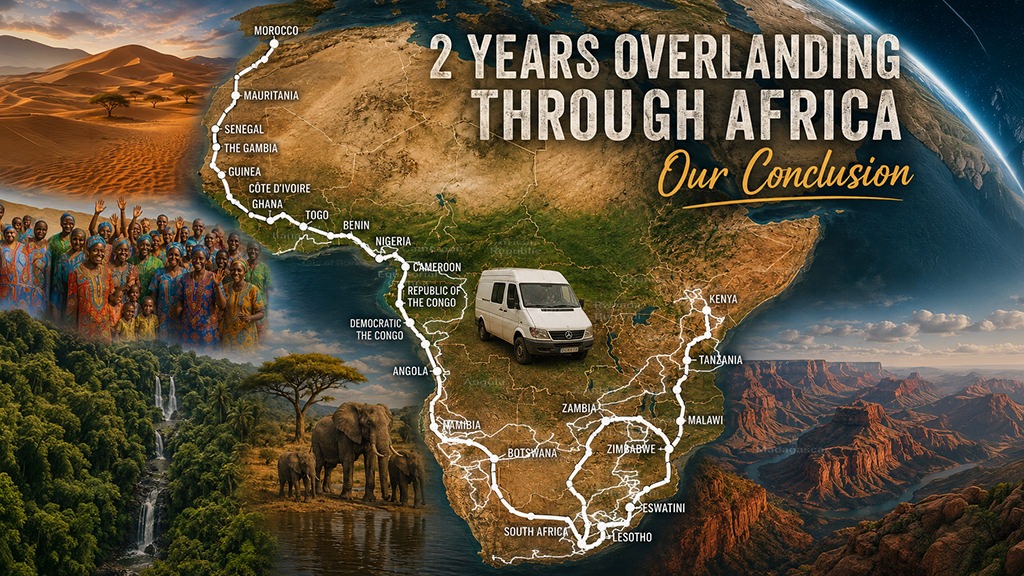
During the past two years, we have driven more than 45.000 kilometers across Africa, crossing deserts, rainforests, mountains, savannas, megacities and some of the most challenging roads we have ever encountered.
Everything in this article is based on our personal experiences and observations from life on the road.
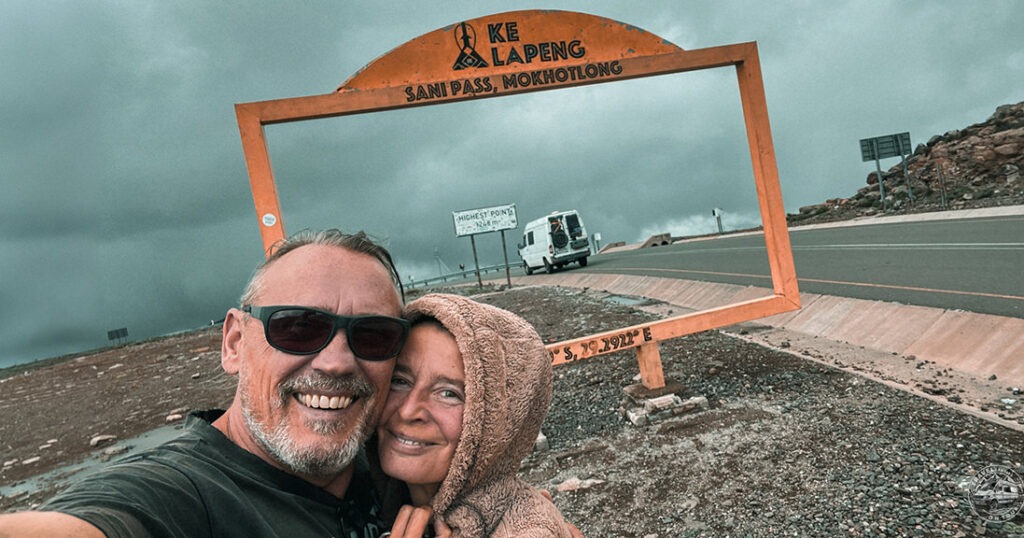
What is overlanding for us?
Overlanding means different things to different people. Some focus on the vehicle, others on the destinations, the challenges, or simply the journey itself.
For us, Overlanding means freedom.
Whenever possible, we leave the main roads behind, get off the asphalt and head into the places, where few people go.
We are happiest, when parked in the middle of nowhere, surrounded by epic nature, with no fences, no schedules and no neighbors. These are often the places, where we stay for several days, simply enjoying the moment.
But Overlanding is not only about landscapes.
It is also about people, cultures and perspectives. We love stepping into worlds, that are different from our own, learning how others live, listening to their stories and sometimes questioning our own assumptions along the way.
Some of our most memorable moments in Africa happened far away from famous attractions. They happened during conversations with locals, around campfires with fellow travelers, at roadside markets or in small villages where curiosity quickly turned into friendship.
This is important to understand, before reading the rest of this article. Many travelers may have a completely different definition of overlanding and may therefore feel countries very differently than we do.
We have the watches, Africa has the time.

How it all started
Our African adventure began in Morocco in October 2024.
Originally, we planned to travel together with two other overlanders. However, things turned out differently. One couple decided to return home from The Gambia, while with the other traveler, we eventually realized, that our travel styles simply did not match. So, for most of Africa, it was just the two of us again.
The plan was simple: reach Nigeria and Cameroon before the middle of March. Anyone who has traveled through tropical Africa knows why. The rainy season can turn roads into mud pits, border crossings into endurance tests and entire regions into logistical nightmares. Trust us, nobody really wants to travel through large parts of Africa during the rainy season, if they can avoid it.
And this part of the plan worked perfectly. We reached Nigeria just in time. Only a few days later, the rainy season arrived.
For that reason, the first part of our journey was much faster than we would normally prefer. We kept moving south along the West African coast, always with one eye on the calendar and the approaching rains.
At the same time, I (Totti) was constantly working on my TRANSAFRICA TRAVELmap, documenting our route and publishing regular updates, so other travelers could follow our progress and benefit from our experiences.
Once we reached Angola, everything changed. OK, we had been robbed the 2nd time (1st time in Spain), but overall and at least we were able to travel much slower from now on.
From Namibia onward, we finally slowed down totally. The pressure seemed to be gone, the roads improved and we could once again travel the way we enjoy most: slowly, spontaneously and without fixed plans. Instead of racing against the weather, we simply followed it, staying where we liked and moving on, whenever we felt like it.
What followed, were a few months of relaxed travel through Southern Africa, eventually taking us all the way to South Africa and later north again through Tanzania to Kenya.
At least that was the plan.
As so often happens in long-term travel, reality had other ideas. Routes changed, plans evolved and some opportunities were simply gone. In the end, our carefully timed strategy stopped working and we found ourselves spending almost six months traveling during the rainy season. Not exactly what we had intended, but as it turned out, some of our most memorable (and remarkable) experiences happened precisely, because things did not go according to plan.
The Challenges of Overlanding Africa
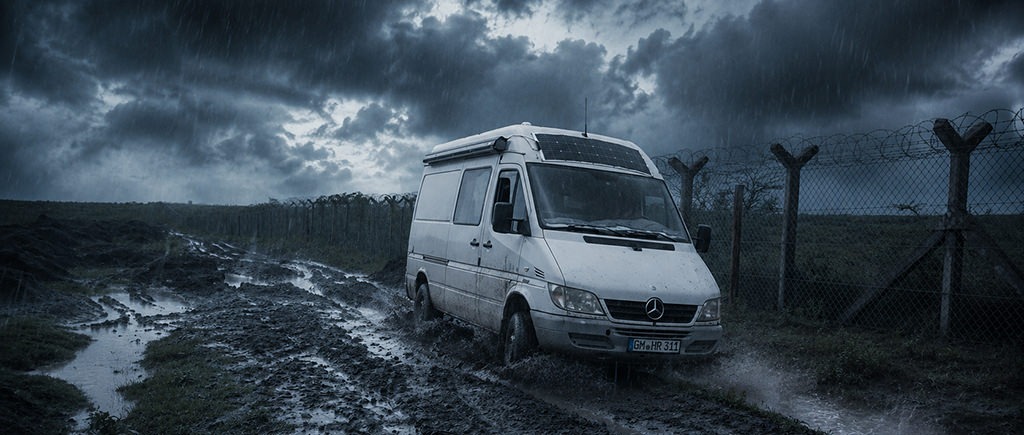
Before we get to the individual countries, it is important to understand that overlanding Africa is not always easy… it is simply NOT.
Many readers expect every African country to feel completely different. In reality – from an overlanding perspective – many neighbouring countries share surprisingly similar challenges, infrastructure levels and travel experiences. This is one reason why some of our observations may appear repeatedly throughout this article.
Large parts of our route involved some of the worst roads we have ever driven. Traffic was often chaotic and exhausting, especially in West and East Africa. Until we reached Angola, wild camping was frequently limited to carefully selected locations due to security concerns, which significantly reduced the sense of freedom we usually enjoy.
There was also an endless amount of bureaucracy. Border crossings, permits, checkpoints, customs procedures and paperwork often required far more time and patience, than the actual driving. Corruption, requests for unofficial payments and constant begging were part of everyday travel throughout much of the continent. In every country we visited, these issues existed to some degree – sometimes only occasionally, sometimes several times a day. As a result, they were generally not a decisive factor in our “ratings”, unless they were exceptionally severe or had a significant impact on our overall experience.
That said, none of this should come as a surprise. We have already written extensively about these topics throughout our journey. This article is not intended to focus primarily on the difficulties, but rather on the countries themselves, the landscapes, the wildlife, the people we met, the experiences we had and how each destination compares from our personal perspective as photographers and overlanders.
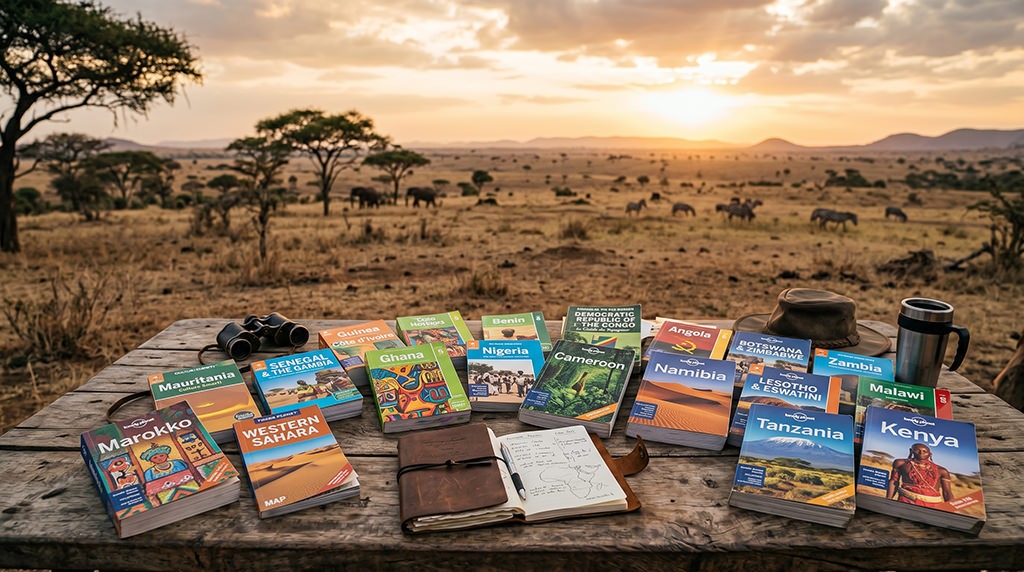
How We Felt the Countries
Before we begin, one important note: these “ratings” reflect our personal style of overlanding. It’s more of a feeling rather than a rating.
The things that mattered most to us were freedom, landscapes, wild camping, wildlife, photography opportunities, local people, adventure, road conditions, costs and the overall experience of traveling through a country.
Because of that, some countries may rank much higher or lower than many travelers would expect.
Africa Is Not Really All About Countries
This may sound strange in an article that lists countries, but after two years in Africa, we came to that simple conclusion.
Yes, every country has its own character, culture and highlights. But many of the things that shaped our experience, transcended borders.
The memories that stayed with us, was the combination of all the things already mentioned above, that shaped our overlanding experience.
That is why these ratings should not be taken too seriously. They are simply an attempt to summarize our experiences in countries, that were often far more similar than different.
What We Did Not Consider
These “feelings” are not based on hotels, campsites, restaurants, nightlife, shopping, beach resorts or organized tourist activities.
The Gateway To Africa – MOROCCO 🇲🇦 (and western Sahara)
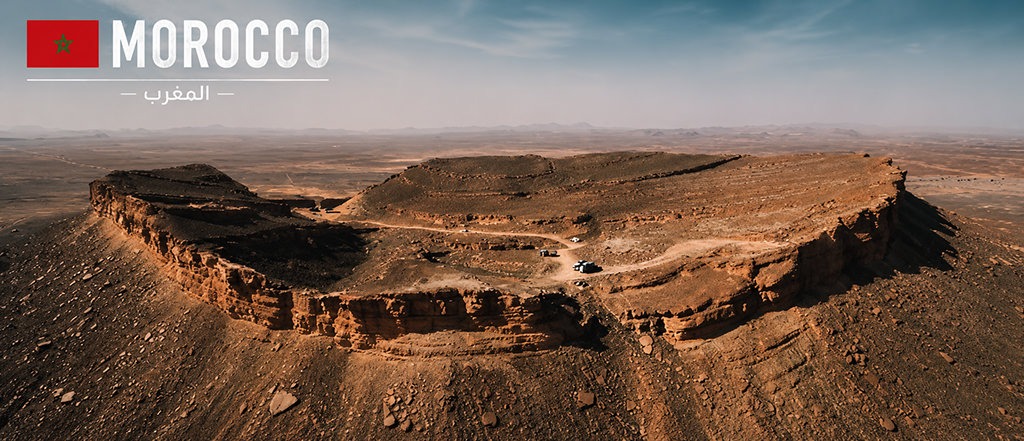
Morocco was our gateway to Africa and – looking back – one of the easiest countries to enter and travel. The ferry crossing from Spain is straightforward, immigration is efficient and mobile internet, water supply and infrastructure are excellent by African standards.
What really makes Morocco special, however, are its landscapes. From the Atlas Mountains to the Sahara, the country offers an incredible variety of scenery and countless opportunities for wild camping, adventures and photographing. For many overlanders, Morocco is, where the feeling of freedom truly begins.
The people were mostly friendly and welcoming, although in some tourist areas they could be quite persistent. Police checkpoints were common, but generally relaxed and professional. Corruption was not a significant issue during our travels.
Morocco combines stunning landscapes, good infrastructure and a genuine sense of adventure. It is easy to understand, why it remains one of the most popular overlanding destinations on the continent.
Our Personal Highlights: Atlas Mountains, Medouar Crater, Erg Chegaga
Our Personal Feelings so far: Hell yes, our African journey has finally begun. We are absolutely loving it. We’d happily spend much more time here, but the clock is ticking. More of this on the rest of the journey, please.
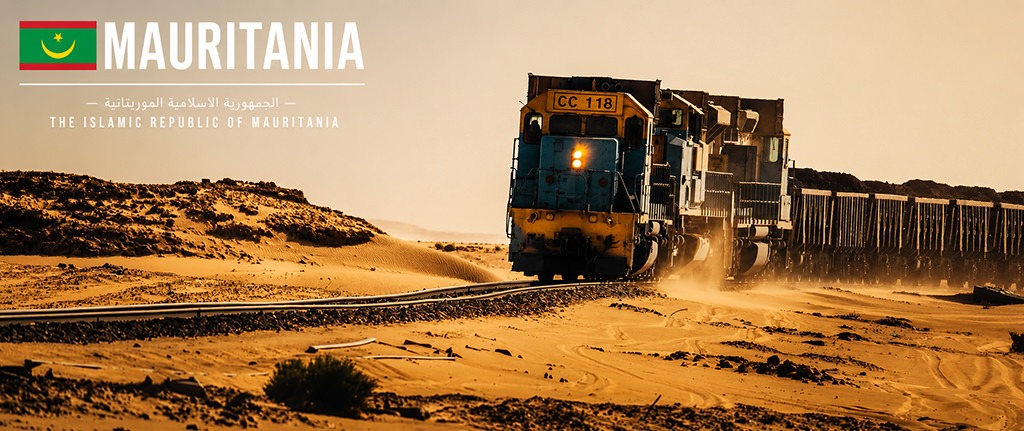
MAURITANIA 🇲🇷
Mauritania was our first real taste of the Sahara and felt noticeably more African than Morocco. Crossing the border required patience, plenty of fiches and a certain tolerance for bureaucracy, but overall the process was manageable.
Road conditions were generally better than expected, although some sections were heavily corrugated and the tracks near the Diama border were among the worst we encountered so far. Fuel quality is often criticized, but apart from slightly increased fuel consumption, we experienced no major issues. Water was widely available and overnight spots were easy to find.
The people were mostly friendly, although children in particular could sometimes be quite intrusive. Corruption existed, but remained limited and easy to avoid, by simply staying polite and firm. Nouakchott, on the other hand, was one of our least favorite capitals in Africa, with heavy traffic, smog and little charm.
What makes Mauritania special, is not its cities but its vast emptiness. Endless desert landscapes, remote tracks and a feeling of isolation, create an atmosphere that is difficult to find elsewhere. While the country did not completely blow us away, it offered some unforgettable moments and a genuine sense of adventure.
Our Personal Highlights: The endless Sahara, the Iron Ore Train, the feeling of absolute vastness.
Our Personal Feelings so far: We definitely need to come back one day. This country has far more to offer, than we were able to see. That said, the constant attention and occasional intrusiveness of some people can become exhausting.
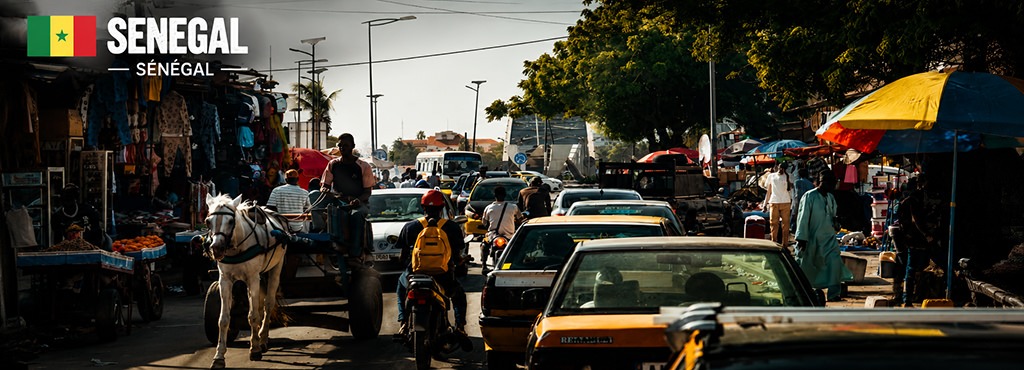
SENEGAL 🇸🇳
Senegal was the country, where we got our first real taste of sub-Saharan Africa. The landscapes were changing, the atmosphere felt different and for the first time we felt, that we had truly left North Africa behind.
The country was easy to travel. Road conditions were generally good, diesel quality and availability were no problem and we experienced no bribery attempts at all. Water was easy to find and wild camping was usually straightforward. Mobile internet, however, was disappointing, with weak coverage and often very slow speeds.
The people were friendly and generally less intrusive than in some neighboring countries, although curious children were never far away. Dakar was also one of our least favorite capitals, with heavy traffic, smog and a surprisingly high cost of living.
While Senegal never completely amazed us with its landscapes, it was a country, we genuinely enjoyed. For the first time, we experienced the hectic energy of African streets, bustling markets, chaotic traffic and the feeling of stepping into a completely different world. Everything felt more exciting, more adventurous and less familiar. Senegal was, where our African journey truly began.
Our Personal Highlight: The first real sub-Saharan Africa feeling, bustling street life and the excitement of entering a completely different world.
Our Personal Feelings so far: Okay?… so this is where Africa really begins? Everything feels different now. We are excited, curious and highly motivated for what lies ahead.
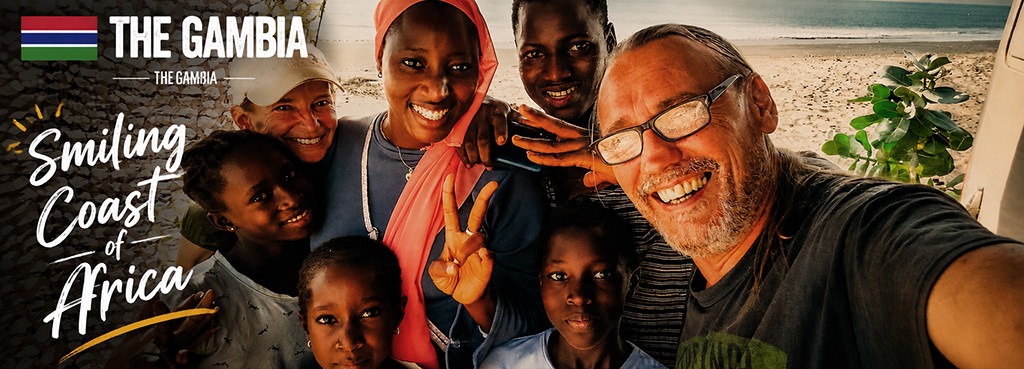
THE GAMBIA 🇬🇲
The Gambia may be Africa’s smallest mainland country, but it left a surprisingly big impression on us. Traveling here was easy, roads were generally excellent and we encountered some of the friendliest people of our entire journey. Corruption was virtually nonexistent and communication was effortless, thanks to English being the official language.
Known as the Smiling Coast of Africa, The Gambia fully lived up to its reputation. People were incredibly open, curious and welcoming. Conversations happened everywhere, whether at markets, roadside stalls or simply while walking through town. The country felt colorful, vibrant and full of life.
The Gambia River forms the backbone of the country and offers beautiful scenery, especially away from the larger towns. Along the Atlantic coast, endless beaches and palm-lined shores create a relaxed atmosphere, that feels very different from many other parts of West Africa.
For us, The Gambia was also, where we had our first real experience of African bush landscapes beyond the cities and villages. Combined with the lively markets, the colorful street life and the warmth of the people, it became one of the more memorable stops of our West African journey.
Our Personal Highlights: The incredibly friendly people, colorful markets, vibrant street life, the beautiful Atlantic coast, the Gambia River and our first real experience of African bush.
Our Personal Feelings so far: Finally the Africa we had imagined? OK, let’s go on, we are curious.
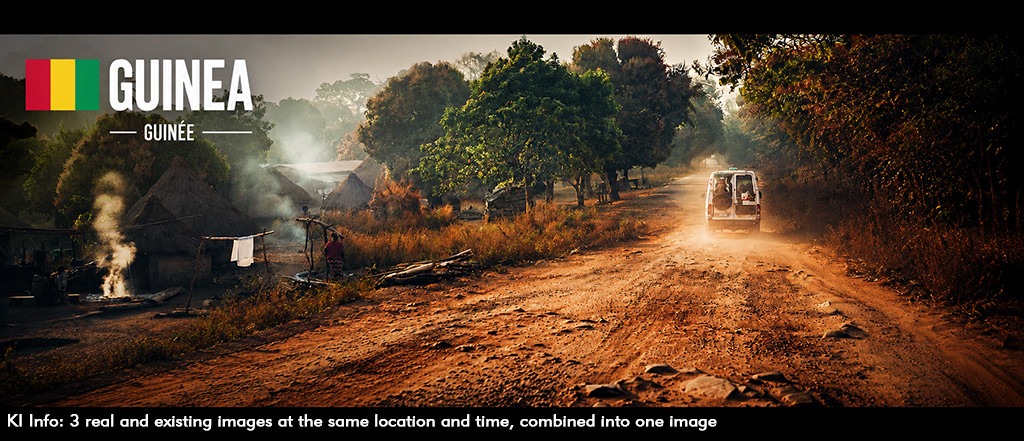
GUINEA 🇬🇳
Guinea was the country, where our journey started to become genuinely challenging. The landscapes became greener, more mountainous and considerably wilder. At the same time, the roads deteriorated dramatically. Some of the tracks we encountered here, rank among the worst and most demanding of our entire travels.
Traveling through Guinea required patience and flexibility. Finding fuel, mobile coverage and wild camping spots was generally not a problem, but everyday logistics were often more difficult than in neighboring countries. Food shopping was particularly challenging, with very limited availability and surprisingly high prices. In fact, Guinea turned out to be one of the most expensive countries we visited in West Africa.
The people were mostly very friendly and welcoming. Interactions with police and officials, however, became noticeably less relaxed than before. Corruption was a recurring issue and requests for money became increasingly frequent, occasionally turning into lengthy stand-offs.
Conakry deserves a special mention. In more than 17 years of traveling through more than 90 countries, it was the most stressful city we have ever driven through. Endless traffic, pollution, chaos and constant pressure pushed us closer to our limits than anywhere else on our planet so far. The first time we really felt exhausted!
Yet despite all these challenges, Guinea delivered exactly the kind of Africa, many travelers imagine. Burned fields, remote villages, rough roads, overloaded vehicles, red dirt and a constant sense of unpredictability created an atmosphere that felt raw, authentic and truly unforgettable.
Our Personal Highlight: The brutally challenging roads, that often tested our patience, but also showed us the Africa, we had imagined long before this journey began. We also saw some of our very first bigger waterfalls in western Africa.
Our Personal Downside: Corruption was the biggest issue for us. Several officers repeatedly demanded large sums of money and occasionally refused to return our documents unless we paid. One encounter escalated to the point where I eventually told them, they could arrest me, because I had no intention of paying a bribe. Fortunately, they backed down in the end, but it was one of the first really unpleasant experiences of our entire trip.
Our Personal Feelings so far: Uh-oh… things are getting serious now. Wilder landscapes, rougher roads, more chaos, more adventure and far more challenges. This is no longer easy travel.
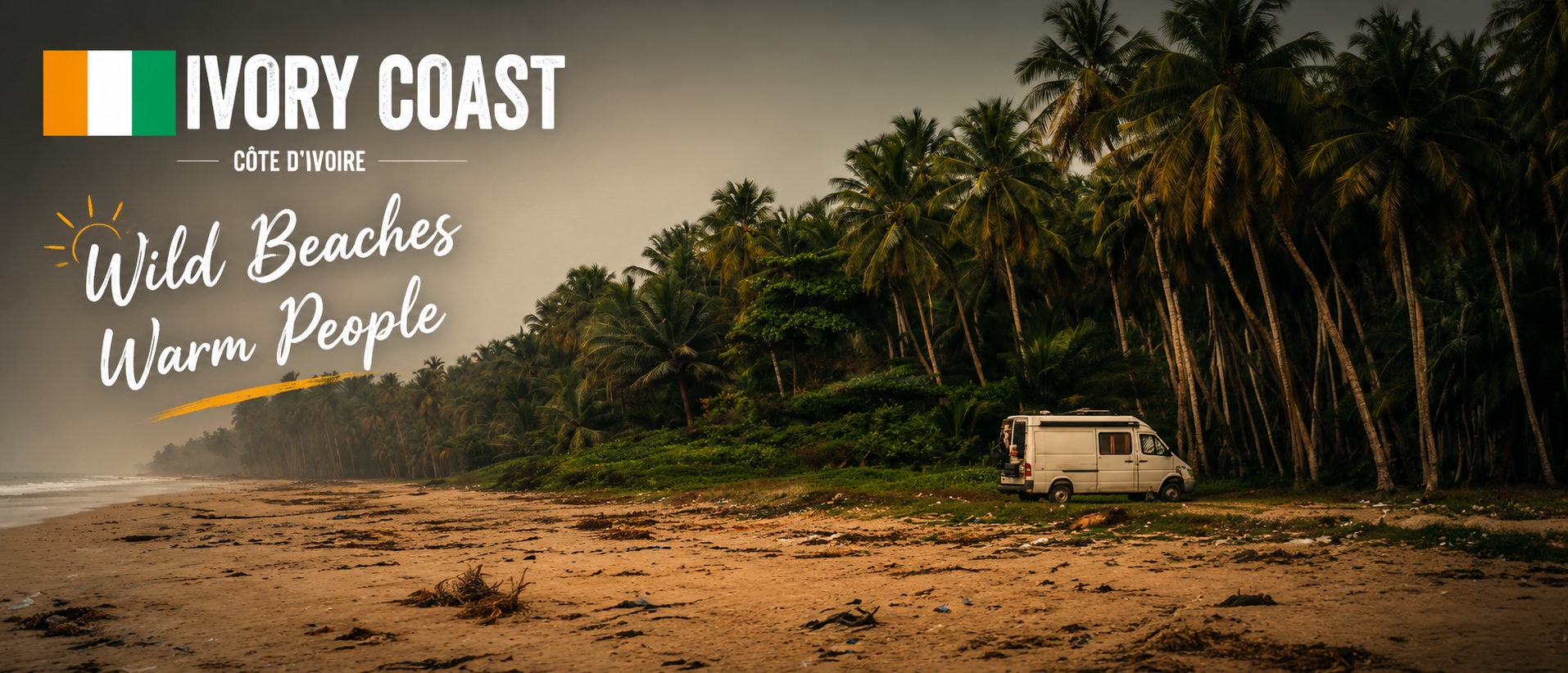
IVORY COAST 🇨🇮
After the challenges of Guinea, Ivory Coast felt surprisingly modern and easy to travel. The border crossing was straightforward, friendly and completely free of corruption. Roads improved dramatically and the drive towards Abidjan was one of the smoothest we had experienced so far.
The country offers a good balance between infrastructure and adventure. Fuel quality was excellent, mobile coverage reliable and supplies easy to find, especially in larger cities such as Yamoussoukro and Abidjan. While prices were higher than expected, everyday travel remained uncomplicated.
People were generally friendly and welcoming. Police checkpoints were infrequent and professional. For the first time in a while, we could simply focus a bit more on traveling, instead of dealing with bureaucracy or road conditions.
Abidjan stood out as one of the most developed cities we encountered in West Africa. Traffic was heavy, but manageable and the overall level of infrastructure was noticeably higher than in many surrounding countries.
Personal Highlight: Reaching remote beaches through dense coastal bush and spending time completely alone on some of the most beautiful stretches of coastline, we found in West Africa.
Personal Downside: Like elsewhere in West Africa, requests for food were common. One particular incident, where donated food was simply discarded in front of us, left a lasting impression and ultimately led us to stop handing out food during the remainder of our journey.
Our Personal Feelings so far: It feels great to be here with our own vehicle. The motivation is still high and we’re looking forward to discovering, what lies further down the road.
GHANA 🇬🇭
After the stories, documentaries and reputation surrounding Ghana, we expected a country, that would feel noticeably more developed and prosperous, than much of West Africa. In reality, our impression was quite different.
While Ghana certainly offers some modern areas and functioning infrastructure, large parts of the country felt far less developed, than we had anticipated. Outside the bigger cities, everyday life often looked very similar to what we had already experienced elsewhere on the route. The roads ranged from excellent to heavily damaged, the villages blended into the familiar bush scenery and many landscapes failed to leave a particularly lasting impression on us.
People were generally friendly and respectful. Begging was less intrusive, than in some neighboring countries, but it certainly had not disappeared. Officials and police were mostly professional and corruption was not a significant issue during our stay.
Traveling through Ghana was straightforward. Fuel quality was good, supplies were readily available and infrastructure was generally adequate. One unexpected challenge was obtaining a local SIM card, as tourists officially require a Ghana Card, which is only available to residents. In practice, finding a helpful local was often the easiest solution.
Wild camping was rarely a problem in Ghana, just as it hadn’t been in the countries before. Sooner or later, there was always a track leading into the bush and usually a place to spend the night. What we increasingly missed, however, were the truly epic campspots, that make us want to stay for several days rather than just one night.
By this point, we were beginning to realize, that Africa is not a typical overlanding destination in the way we had experienced and loved elsewhere. The freedom was there, but the spectacular camps, dramatic landscapes and endless opportunities to linger, were often less common than we had expected.
For us, Ghana was neither disappointing nor exceptional. It was simply another chapter of West Africa, without the memorable highlights or unique character, that some other countries left us with.
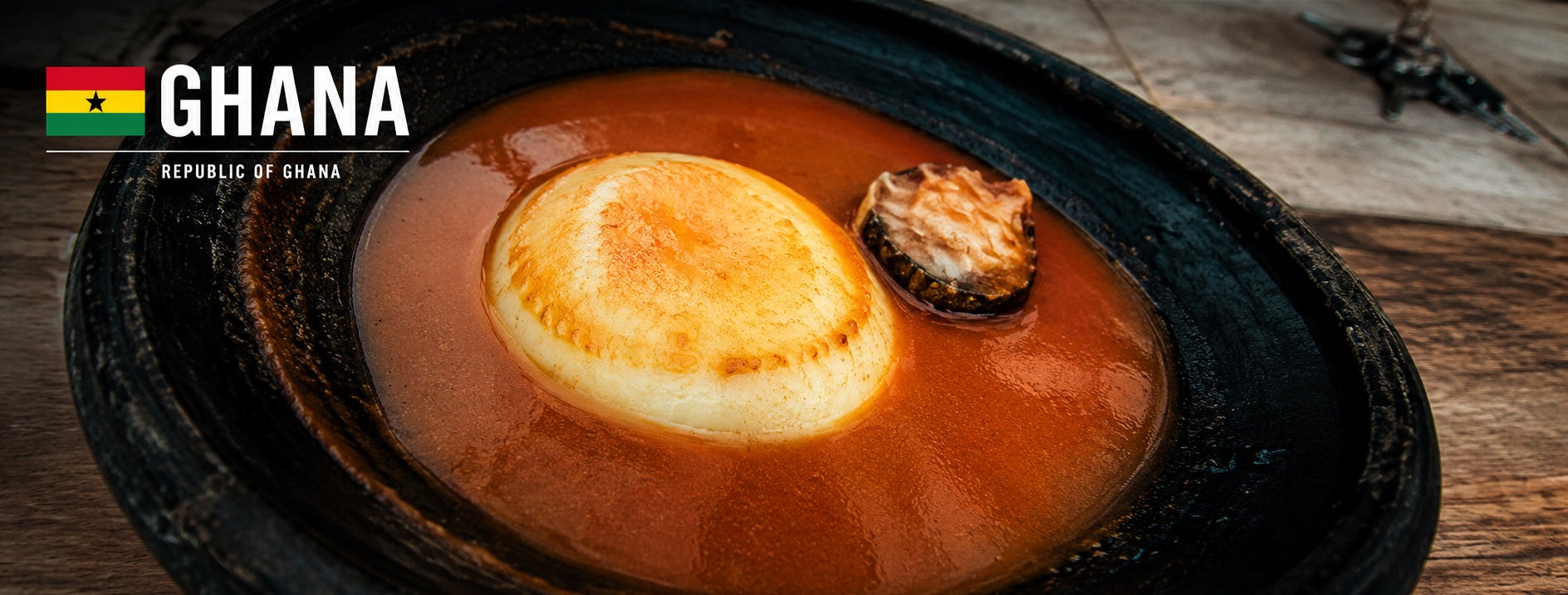
Our Personal Highlights: Discovering Fufu at the Organic Beach Resort. Ghana’s famous traditional dish quickly became one of our favorite local meals during our journey through this country.
The International Stingless Bee Centre. Until then, we had never seen bees like these. Some species have no stinger at all, while others are so tiny, that they are smaller than ants. It was fascinating to learn about these unique pollinators and their role in the local ecosystem. Even more surprising was the honey. Unlike much of the heavily processed honey sold in supermarkets around the world, the honey produced here, turned out to be genuine, natural honey. We even tested it ourselves and were impressed by both its taste and quality.
Our Personal Feelings so far: A little more variety in the landscapes would be nice. Slowly but surely, the constant requests and begging are starting to wear us down a bit. But that’s still okay. More and more, we’re realizing, that the journey itself has to remain the destination.
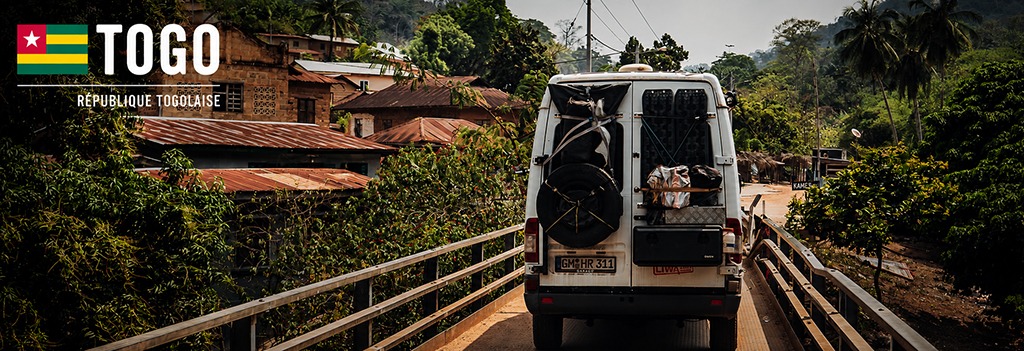
TOGO 🇹🇬
After some of the more demanding countries further west, Togo felt surprisingly calm, organized and easy to travel through. The country may be small, but it immediately stood out through its friendly atmosphere, good infrastructure and welcoming people.
Roads were generally in excellent condition, including many dirt roads. Fuel quality was good, checkpoints were relaxed and we experienced no corruption, bribery attempts or other hassles. Mobile internet was among the best we had encountered so far, with fast and reliable coverage throughout much of the country.
The landscape became more varied and slightly hillier, especially away from the coast. While Togo does not offer the dramatic scenery of some other destinations further south, it provides a pleasant mix of villages, forests, mountains and rural life. Wild camping remained easy and safe and traveling through the country felt refreshingly uncomplicated.
What stood out most was the overall feeling of peace and stability. Togo almost felt like a chance to catch our breath.
Our Personal Highlight: Spending two weeks at Permatogo. It was exactly what we needed at that stage of the journey. A place to slow down, recharge and simply enjoy life, without constantly being on the move.
Our Personal Feeling so far:
Yeah, Togo is definitely a country, where we could have stayed a bit longer. Looking back, this was one of the first countries, where we really noticed, that our priorities were changing and we were just way too fast.
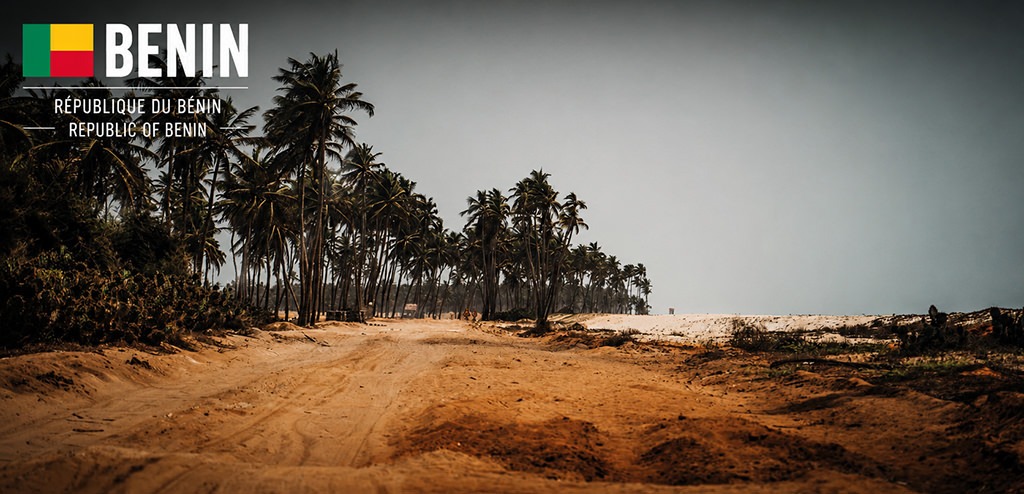
BENIN 🇧🇯
Benin was also an easy country to enter and travel through. The e-Visa process was straightforward, approval arrived quickly and the border crossing itself was uncomplicated. Roads ranged from good to excellent, diesel was readily available and of good quality and we encountered no bribery, harassment or other problems during our stay.
The people we met were friendly, welcoming and relaxed. Officials and police officers were professional and respectful, making Benin feel calm and uncomplicated. Water was generally easy to find at churches and fuel stations and overall logistics posed very few challenges.
Unfortunately, our time in Benin was very short, which means, we never really got the opportunity to explore the country in depth. As a result, Benin remains one of the countries, we know the least about on this journey.
Or Personal Feeling so far: Unfortunately, our time in Benin was far too short to form a deeper connection with the country. What we did experience was pleasant, uncomplicated and surprisingly relaxed. At the same time, our thoughts were already drifting towards Nigeria. Obtaining the visas had been ridiculously complicated and everything we had read beforehand painted a picture of a difficult and unpredictable country. For the first time on the journey, we felt genuinely nervous about what was waiting for us at the next border.
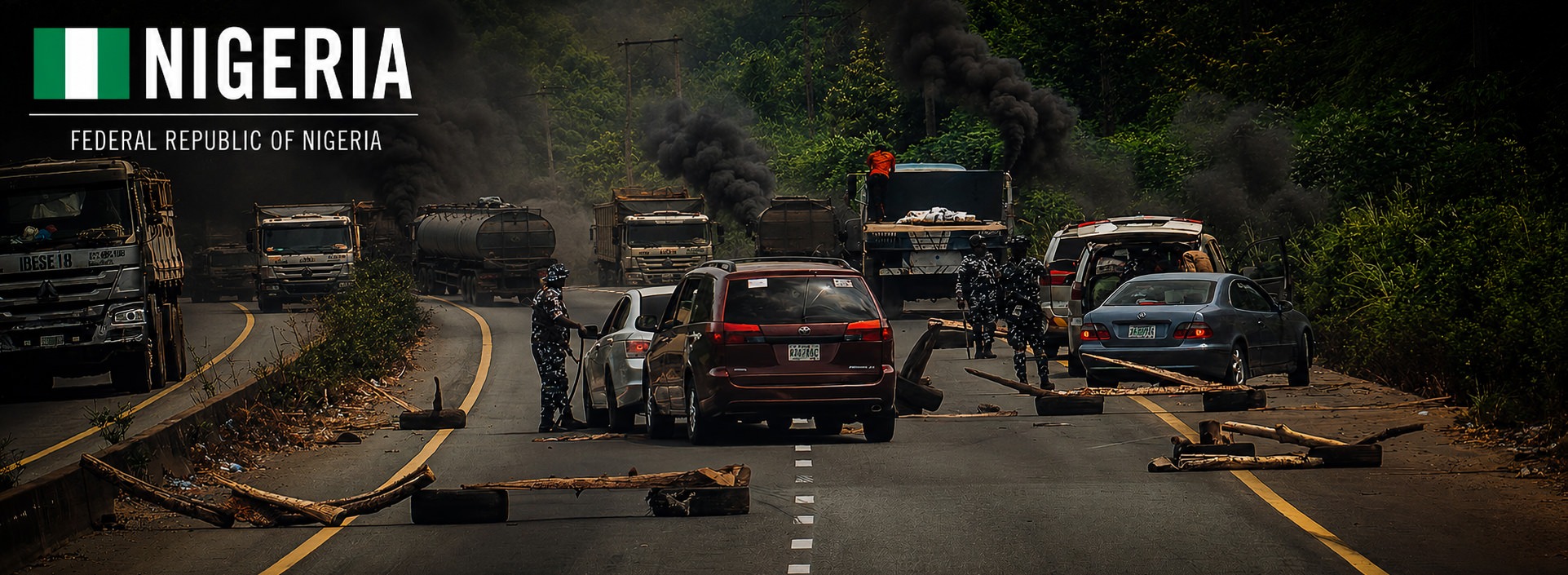
NIGERIA 🇳🇬
Nothing – really nothing – could really prepare us for Nigeria.
This was the country we had worried about the most, long before arriving. Obtaining the visa had been so difficult and almost everything we had read beforehand, painted a picture of chaos, corruption and insecurity. By the time we reached the border, we were already mentally exhausted from months on the road.
And then Nigeria delivered exactly that chaos – and so much more.
Roads ranged from decent to absolutely terrible, second only to Guinea on our route. Traffic was unlike anything, we had experienced before. Millions of people, endless noise, reckless driving, aggressive overtaking, overloaded trucks, motorbikes appearing from every direction and an overwhelming amount of activity, road blocks and police checkpoints, military checkpoints everywhere. The amount of litter was shocking, corruption was present almost everywhere and nearly every single checkpoint came with some form of request for money, food or gifts.
With the more than 200 checkpoints along our route, interactions with police and officials became a daily routine. Yet despite the constant attempts to extract something from travelers, staying calm, smiling and remaining friendly, always solved the situation.
We never paid a single bribe… and we do not know, how this was even possible.
Nigeria is one of those countries, that cannot really be explained. It has to be experienced. The scale, the intensity, the noise, the pressure and the sheer number of people, create an atmosphere unlike anything else, we encountered anywhere on the planet.
And yet, despite all of this, Nigeria gave us one of the biggest surprises of the entire journey.
Our Personal Highlight: Without question, the people. We met some of the funniest, kindest and most welcoming people of our entire African journey here. This includes police officers, soldiers and government officials. The corruption potential was enormous, but so was the humor, charm and friendliness of all the people.
Looking back, we still do not know, whether it was our healthy portion of masochism, but our time in Nigeria was quite literally breathtaking.
Our Personal Feeling so far: By now we were running on empty. We desperately wanted to reach Angola and leave the challenges of West and Central Africa behind us. But there was still a long way to go. Somewhere in Nigeria we realized something important: this was a route we never wanted to drive a second time. We would push through, but once was enough.
Additional Conclusion:
Despite all the chaos, the corruption, the traffic and the countless warnings, we received before entering Nigeria, we never once felt genuinely unsafe or uncomfortable.
Even the most corrupt officers never gave us the impression of being criminals or dangerous people. Most interactions felt more like a tiresome game, than a serious threat. As exhausting as the checkpoints and road blocks became, they were usually accompanied by smiles, jokes and surprisingly friendly conversations.
For safety reasons, we avoided wild camping and instead stayed at churches, hotels and other secured locations. Looking back, however, we believe, this level of caution was probably not necessary on our route. Based on our personal experience, Nigeria felt far less dangerous than its reputation suggests.
The country may be chaotic beyond imagination, but the overwhelming friendliness of its people was impossible to ignore. In the end, Nigeria challenged us mentally and physically, but left us with far better memories than we ever expected before crossing the border.
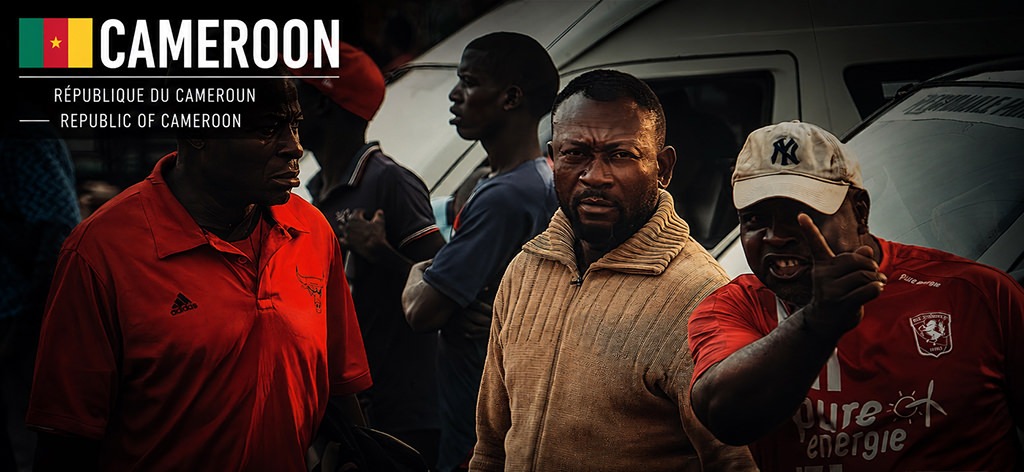
CAMEROON 🇨🇲
Cameroon was the only country on our entire journey that, in hindsight, we would have preferred to skip. Our experiences here were overwhelmingly negative from the very first day after crossing the border. Encounters with officials, military personnel and police officers were often stressful, confrontational and sometimes outright aggressive. It quickly became clear, that we wanted to leave the country as soon as possible.
That being said, our experience does not necessarily represent Cameroon as a whole. We are fully aware, that experiences can differ greatly from traveler to traveler and ours may have been unusually unfortunate. Nevertheless, the atmosphere we encountered, left a lasting impression. Even beyond our personal experiences, it became apparent, that there are underlying tensions within parts of the country.
Traveling through Cameroon required patience. Traffic was often chaotic, checkpoints frequent and interactions with authorities could be exhausting. Corruption was a permanent recurring issue, particularly in the French-speaking regions, where demands for money and attempts to intimidate travelers were not uncommon. Several situations became uncomfortable enough, that we remained constantly alert whenever approaching checkpoints.
The roads ranged from terrible to surprisingly good. While some sections were rough and slow-going, the route from Yaoundé towards the Congo border was among the best road conditions, we had seen in Central Africa so far.
The people themselves were difficult for us to connect with. Compared to previous countries, we experienced fewer smiles and less openness. Whether this was due to cultural differences, regional circumstances or simply bad timing on our part, we cannot say. However, it contributed to the feeling, that Cameroon was fundamentally different from the countries we had traveled through before.
Mobile coverage with MTN was good, fuel was readily available and obtaining water was generally possible through churches and fuel stations. Practical travel logistics were manageable. The real challenge was navigating the human and administrative environment.
Our Personal Downside: The constant confrontations with authorities created an atmosphere, that made us want to leave the country almost from the very first day.
Our Personal Feelings so far: We increasingly noticed that our patience and resilience were wearing thin… really thin. After months on the road, the constant begging, checkpoints and daily hassles were affecting us more and more. In Cameroon especially, we found ourselves becoming less friendly and more withdrawn than before. More and more, we were seeking peace, solitude and freedom, instead of social interaction. What we wanted most at this point, was to finally slow down again and return to the style of travel we truly enjoy.
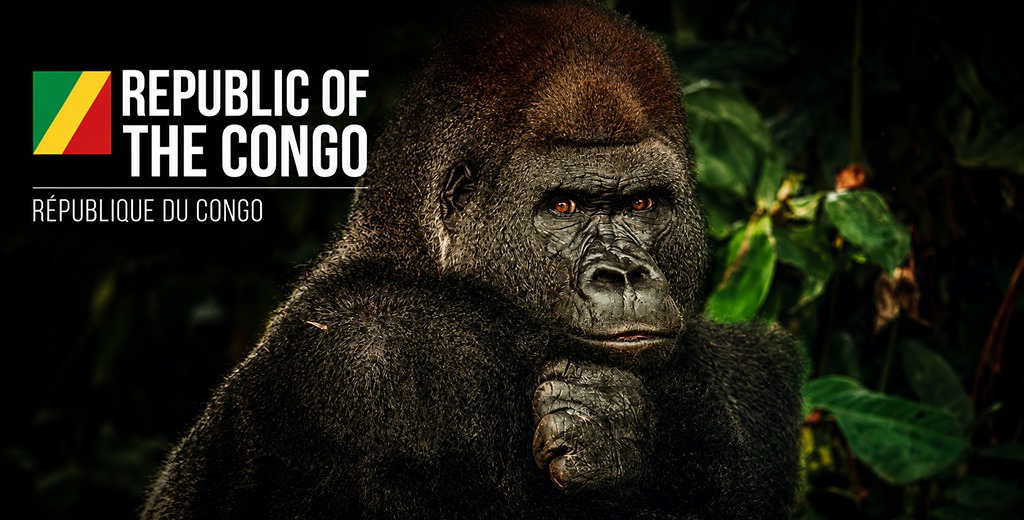
REPUBLIC OF THE CONGO 🇨🇬
After the exhausting experiences in Cameroon, the Republic of the Congo things changed abruptly. The roads became excellent, traffic nearly disappeared and checkpoints became rare. For the first time in a long while, traveling felt easy again.
The country turned out to be one of the most relaxed and straightforward destinations on our entire route. Corruption was barely noticeable, interactions with officials were friendly and uncomplicated and we generally felt very safe throughout our journey.
The roads deserve special mention. Apart from a few rough stretches around Pointe-Noire, road conditions were outstanding. Combined with the low traffic volume, driving became enjoyable again after weeks of stress and constant vigilance.
One challenge, however, was fuel availability. Diesel shortages occurred regularly and finding fuel could sometimes become a real concern. Whenever diesel was available, we filled up immediately. The fuel quality itself seemed perfectly fine and never caused us any issues.
Interestingly, this was also the country, where we recorded our lowest fuel consumption of the entire journey. While Rossi usually consumes around 12–13 liters per 100 kilometers, consumption dropped to just 9.9 liters here. Several times and after several tests, we simply couldn’t explain how that could possibly have happened. Draw your own conclusions.
Mobile coverage was among the weakest we encountered during the journey. Outside larger settlements, internet access was often unavailable and data packages were relatively expensive.
Overall, the Republic of the Congo was a calm, pleasant and surprisingly easy country to travel through. It gave us a much-needed opportunity to recover from the stress and tensions of the previous countries.
Our Personal Highlight:
Taking a boat tour through the Congolese wilderness and seeing gorillas in their natural habitat, as well as visiting the Equator Monument.
Our Personal Feelings so far:
The Republic of the Congo helped us calm down again after some difficult weeks. However, we also noticed, that we were increasingly withdrawing from social interactions. We rarely sought contact with people anymore and mostly kept to ourselves. The desire to slow down and travel at our own pace was becoming stronger with every passing week.
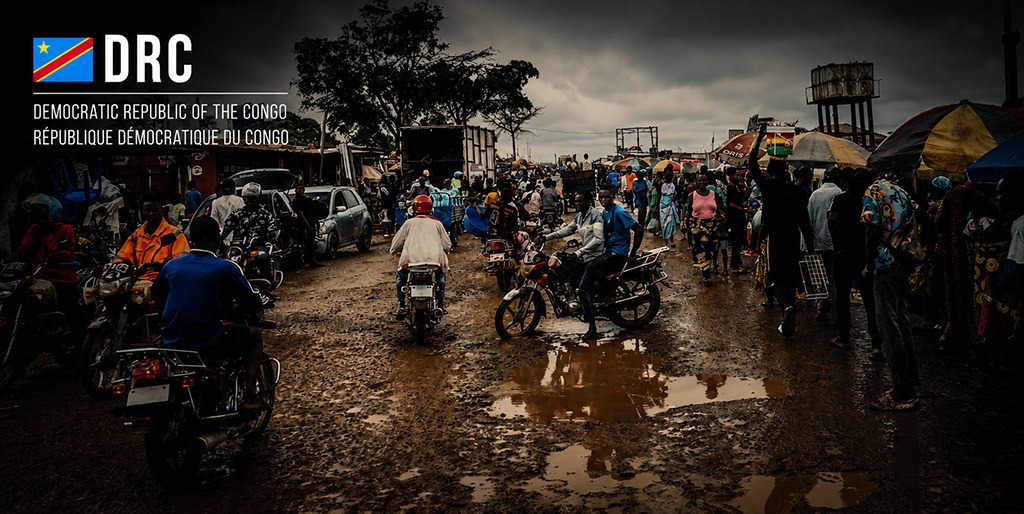
DEMOCRATIC REPUBLIC OF THE CONGO 🇨🇩
The Democratic Republic of the Congo was never really intended to be a destination for us. It was simply a transit country on the way to Angola, the country we had been looking forward to for months.
At the time of our journey, parts of the country were once again experiencing conflict and instability. However, our route was far away from the affected regions and we never encountered any security-related problems. For us, the plan was simple: keep moving and get to Angola as quickly as possible.
Traveling itself was manageable. Traffic was generally light and road conditions ranged from good to poor, but nothing exceptional. The major exception was Matadi.
Matadi was an absolute nightmare. The traffic, road conditions and general chaos made it one of the most unpleasant urban experiences of our entire route. Outside of Matadi, however, the country passed by without leaving a particularly strong impression.
Corruption was present, although generally manageable. We encountered various fees, taxes and situations, that felt quite questionable, but nothing escalated into serious problems. Officials and officers were mostly friendly, even though we often had the feeling, that someone was trying to extract a little more money whenever possible.
Fuel availability could become problematic. Many stations either had no diesel available or were unwilling to sell fuel. Filling up completely, before leaving Pointe-Noire, proved to be a very good decision.
Overall, our passage through the Democratic Republic of the Congo was relatively uneventful. Apart from Matadi and occasional logistical challenges, the country remained more of a transit experience, than a destination in its own right.
Personal Downsides:
Matadi. Without any doubt. The city was chaotic, exhausting and by far the most difficult part of our passage through the country.
Another thing, that slowly started to catch up with us, was the rainy season. More frequent downpours, muddy roads and grey skies became part of daily travel. It wasn’t a major problem yet, but it was a clear reminder, that the dry season was coming to an end and that conditions further south could become much more challenging.
Our Personal Feelings So Far:
By this stage, our focus had shifted almost entirely towards Angola. After months of challenges and constant movement, we were no longer interested in sightseeing, socializing or exploration. We simply wanted to keep moving south and finally slow down again.
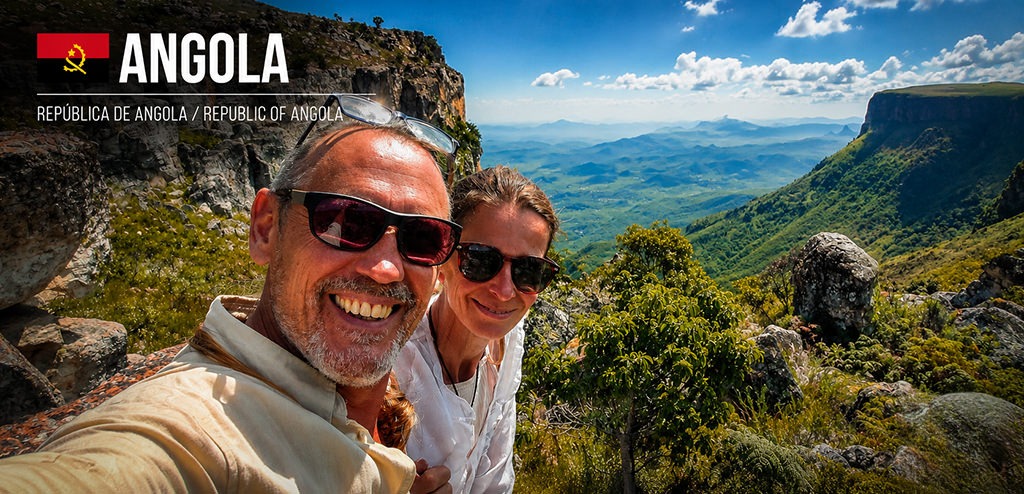
Angola 🇦🇴 – A New Chapter Begins
Angola felt like a turning point on our journey. After months of challenges and constant movement through West and Central Africa, we finally crossed into a country, that allowed us to breathe again.
The landscapes became dramatically more impressive. Mountain ranges, canyons, escarpments and vast open spaces replaced much of the monotony, we had experienced before. For the first time in a long while, we were not just taking snapshots anymore. We were actually photographing again.
Traveling through Angola was generally straightforward. Traffic was manageable, roads ranged from acceptable to good and checkpoints were no longer a constant concern. Corruption was hardly noticeable and driving became enjoyable again.
Money, however, could be challenging. ATMs were often crowded, withdrawal limits were low and both VISA and Mastercard frequently caused problems. Exchanging money at the border proved to be the easiest solution.
Security was somewhat mixed. While we never felt seriously threatened, Angola was the first country, where we experienced repeated attempts to access our vehicle. We were robbed at a beach and on several occasions people tried to open our doors while we were inside. Even at a police station in Caxito, someone attempted to check the door handles. Basic caution is definitely recommended, especially at beaches and in urban areas.
The people appeared reserved, but generally friendly enough. Officials and police officers were mostly professional, although Angola’s bureaucracy can be spectacularly absurd at times.
Road conditions varied considerably. Main roads were often decent, while some sections between Luanda and Lubango could be rough. Diesel availability remained problematic in the north, but improved significantly further south.
One important note: Angola was experiencing a cholera outbreak during our visit. Water should always be filtered, disinfected or treated before use.
Our Personal Highlights:
The Tundavala Gap, the increasingly spectacular landscapes and finally having opportunities to create real photographs again instead of merely documenting the journey.
Our Personal Downside:
Spending two full days dealing with prosecutors and authorities, because we had once again become victims of theft. The amount of bureaucracy involved was almost beyond belief.
Our Personal Feelings So Far:
Finally.
We had made it through the part of Africa, we never wanted to drive a second time. The pressure was gone almost instantly. For the first time in months, we felt genuine relief and found ourselves enjoying the journey again, rather than simply pushing forward.
Angola felt like the beginning of a new chapter. The landscapes became more impressive, the travel became easier and our enthusiasm returned. With renewed energy and a great deal of optimism, we looked ahead to everything, that was still waiting for us further south.
Hell yeah, Southern Africa – we’re comin’!

NAMIBIA 🇳🇦
After the difficult and exhausting months further north, Namibia felt almost like coming home. We already knew the country from a previous journey and looked forward to reaching it long before crossing the border.
The biggest difference compared to West and Central Africa was the sense of freedom. Suddenly there was space again. Space to drive, space to think and space to spend a few days somewhere without constantly feeling rushed or observed.
We spent three months in Namibia and explored large parts of the country. While prices have increased noticeably since our last visit, the landscapes remain as spectacular as ever. Endless gravel roads – often heavily corrugated – mountain ranges, deserts, dry riverbeds and vast horizons constantly reminded us, why Namibia has become such a popular overlanding destination.
One thing we noticed quickly was, that wild camping is often portrayed as easier than it actually is. Large parts of the east are fenced farmland, while the west offers far more opportunities for remote camps and solitude. Once you reach those western regions, the feeling of freedom becomes difficult to beat.
Another thing we had missed far more than we realized, was the food. After many months in West and Central Africa, Namibia was the first country, where we could once again find many of the things, we genuinely enjoy. Good quality meat, liver sausage, proper cold cuts and well-stocked supermarkets suddenly became part of everyday life again. Everything was readily available and surprisingly affordable.
Henties Bay deserves a special mention. Not only did we discover, what was probably the best salami we have ever eaten, but we also stocked up on large quantities of biltong, something we had been looking forward to for a very long time.
For the first time in many months, we stopped counting kilometers. The pressure disappeared. We slowed down, stayed longer in places and simply enjoyed being on the road again.
Our Personal Highlights:
Sossusvlei, Deadvlei, Spitzkoppe, Fish River Canyon, Spreetshoogte Pass, Etosha National Park and its wildlife. In reality, much of central and western Namibia felt like one continuous highlight.
Perfect meat and the best salami in the world.
Personal Downsides:
Wild camping can be surprisingly difficult in the eastern and southeastern parts of the country, due to fences and private land.
Our Personal Feelings so far:
Namibia felt like a reward after everything that came before. Good food, beautiful landscapes, freedom and a much slower pace finally brought back the kind of travel we enjoy most. For the first time in a long while, we felt relaxed again.
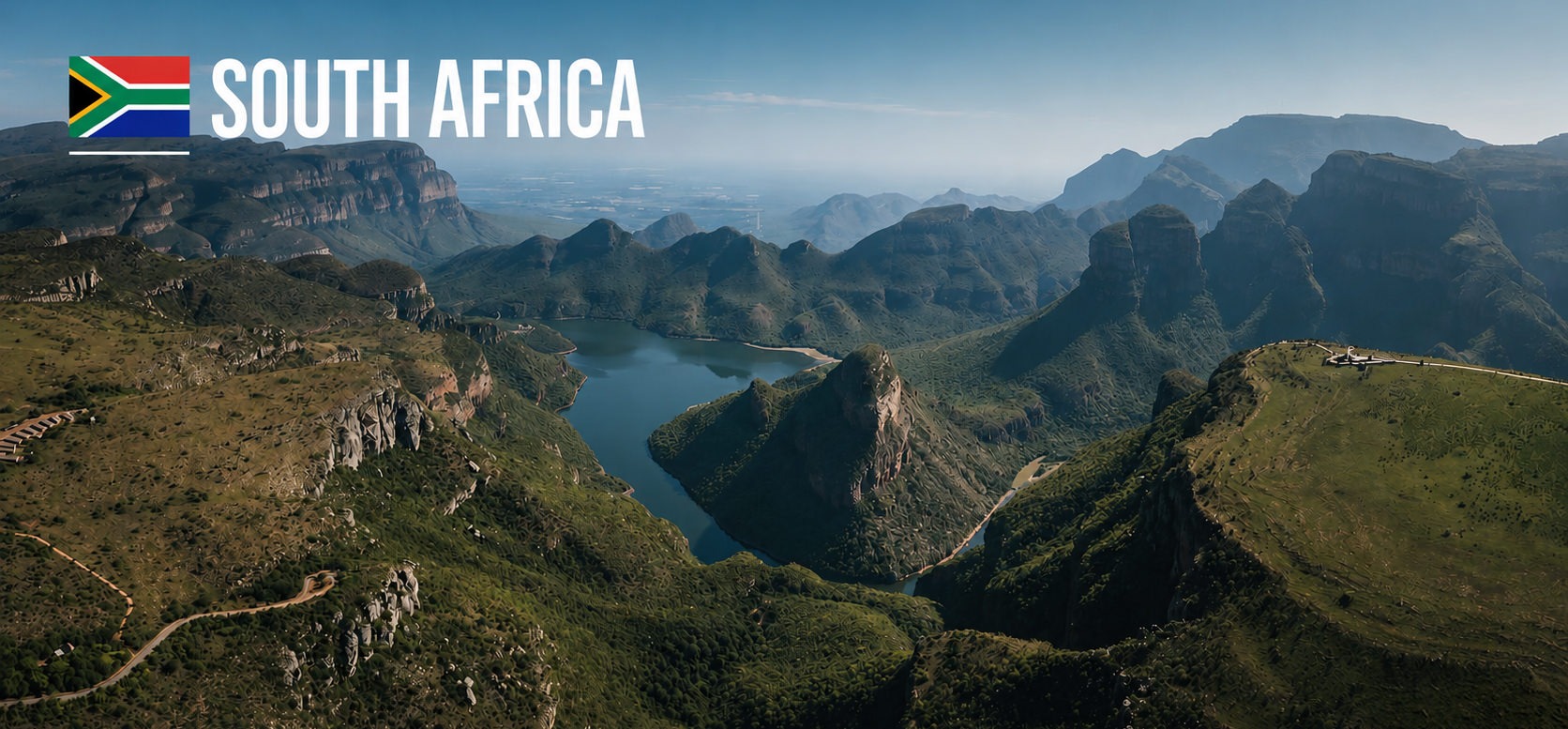
SOUTH AFRICA 🇿🇦 – When Dreams Collide with Reality
South Africa is undeniably one of the most spectacular countries on the African continent. The variety of landscapes, mountain ranges, coastlines, canyons, wildlife areas and scenic roads is extraordinary. It is easy to understand why millions of tourists visit every year.
Our plan had originally been simple: stay for six months, enjoy the country and use the time to avoid the rainy season further north. Unfortunately, reality quickly got in the way. The first major frustration began with the visa extension. Despite countless attempts, phone calls, visits to authorities and discussions with officials, we were unable to pay for the extension. The process was online only and neither banks, VFS offices, nor government staff could and wanted provide any meaningful help. The answer was always the same: it must work online.
South Africa also challenged some of our expectations about overlanding. Unlike many other countries, true freedom camping is extremely limited. Almost everything is fenced, privately owned, protected, reserved or part of a national park. “Millions” of kilometers of fenced areas speak for themselves.
While there are countless campsites, picnic sites and parking areas, finding those remote and epic places, that many overlanders seek, is often impossible or discouraged for security reasons.
Security was a constant topic throughout our stay. We personally experienced several attempted thefts and were repeatedly warned by both locals and police. During our time in the country, local news seemed filled almost daily with reports of murders, armed robberies, shootings and violent crime. Not far from one of our camps, a woman was raped and murdered. Elsewhere there was a fatal bar shooting and a young man was killed over a simple misunderstanding.
All of this happened within just a few days.
Whether these events directly affect travelers is another question, but they inevitably shape the overall feeling.
One experience affected us particularly deeply. We became first responders at a severe traffic accident and remained there from the first minute until the end. Despite many people standing nearby, hardly anyone helped. A young man eventually died. It was one of the most difficult moments of the entire journey.
What surprised us, was the contrast between the security situation and the people themselves. Most South Africans we met were friendly, helpful and welcoming. The police were equally professional and polite. We never experienced bribery, harassment or any serious problems with officers. The feeling of insecurity came far more from what was happening around us, than from the people we actually interacted with.
Another topic that became increasingly visible, once we spent more time away from the tourist routes, was the ongoing tension between different population groups. Conversations in rural areas often revealed strong racial resentment from all sides. It was a subject, that repeatedly surfaced during our travels and left us with the impression, that many wounds from the past remain far from healed.
Financially, South Africa was also much more expensive than we expected. Nearly every attraction has an entrance fee. Waterfalls, viewpoints, canyons, parks and reserves – all come with separate charges. For shorter holidays this is hardly an issue. For long-term overlanders, traveling for several months, however, the costs add up quickly.
For travelers with rental vehicles, comfortable campsites and a holiday budget, South Africa is fantastic. We felt exactly the same during our first visit in 2006. But traveling the country for several months as independent overlanders, gave us a very different perspective.
Our Personal Highlights: Blyde River Canyon, God’s Window, Bourke’s Luck Potholes, the Drakensberg Mountains, Sani Pass, Mountain Zebra National Park, Tsitsikamma National Park, Knysna, the Wild Coast, Cape Town, Cape Agulhas and – not least – the excellent food and arguably the best biltong in the world.
Our Personal Downsides: Security concerns, limited overlanding freedom, expensive attractions, failed visa-extension procedures, increasing costs, constant fencing and restrictions on wild camping.
Another thing, we noticed repeatedly was, how sensitive many people reacted to criticism of their country. As long as we praised South Africa, conversations were easy and enthusiastic. The moment we raised concerns about safety, costs, bureaucracy or other issues, reactions could change dramatically. Some people became defensive, others ended the discussion altogether or dismissed our experiences. It often felt, as though criticism from foreigners was unwelcome, even when based on personal observations, rather than prejudice.
Our Personal Feelings so far: Not in any way good. We were genuinely disappointed. South Africa offered some of the most beautiful landscapes of the entire journey, but at the same time it gave us some of the least freedom. We found ourselves increasingly frustrated and were ultimately happy to leave. We ended up enjoying our time in Lesotho far more. For us personally, South Africa is not a good overlanding country. It won us over at first sight, but lost us somewhere along the road.
For six years, we have been carrying a bottle of wine around the world.
By now, it is more than twenty years old. We had saved it for South Africa – the country we had been looking forward to more than any other.We never opened it.
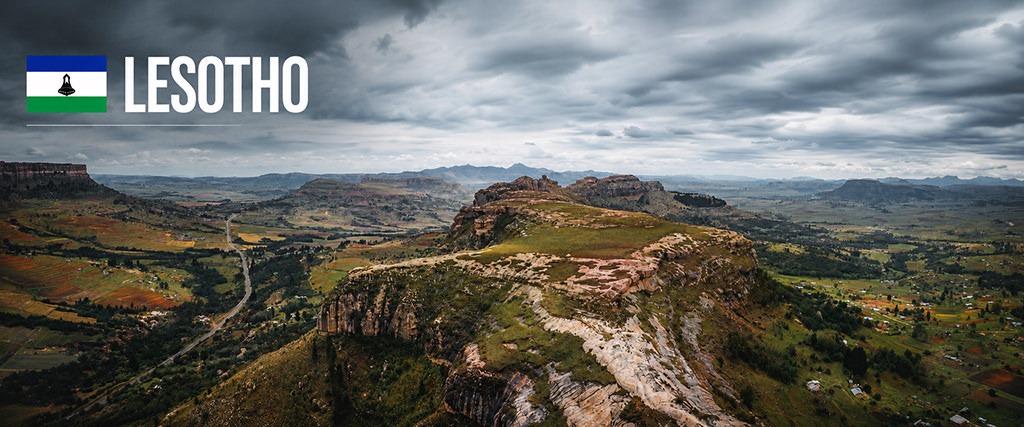
LESOTHO 🇱🇸 – left us speechless
The rainy season had already begun and yet every single kilometer felt like a tribute to nature. Endless mountain ranges, deep valleys, winding passes and dramatic skies turned even the simplest drive into an experience. For us, Lesotho is the most beautiful country in Africa.
Wild camping is possible, but not always easy. Especially in the east, people are everywhere and privacy can be hard to find. The western part offers more opportunities and generally feels calmer.
The people are incredibly friendly, cheerful and welcoming. As elsewhere in Africa, privacy was sometimes difficult to find and curious locals, especially children, were rarely far away. Nevertheless, our overall experience with the people of Lesotho was overwhelmingly positive.
Our Personal Highlight:
Honestly? The entire country. Sani Pass, the mountain roads, the remote highlands and the breathtaking scenery around almost every corner. Lesotho felt like one giant highlight.
Lesotho made us forget the frustrations of the previous months. We spent more time looking at landscapes than worrying about logistics. If South Africa disappointed us, Lesotho did exactly the opposite. The only reason we left was that our South African visa days were running out.
Our Personal Feelings so far:
Shit! The rainy season is starting… and we are right in the middle of it.
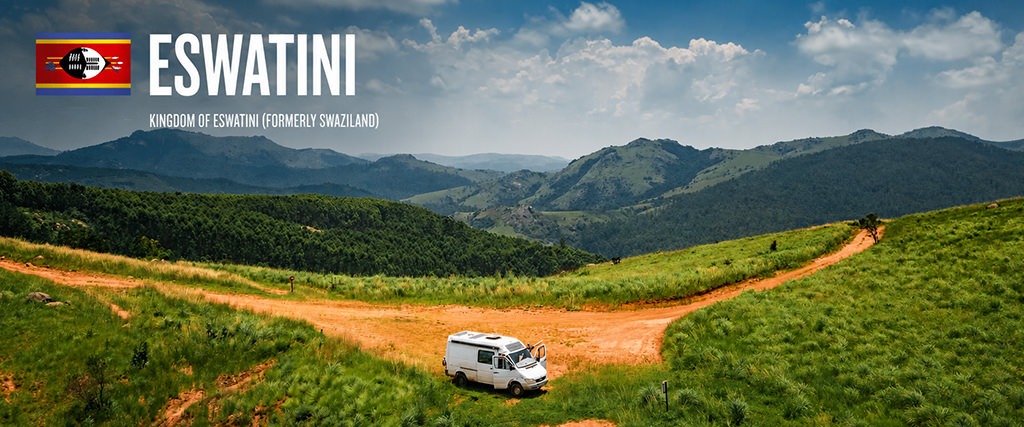
ESWATINI 🇸🇿 – Kingdom of Eswatini (formerly Swaziland)
Eswatini was one of those countries, that was pleasant to travel through, yet never quite managed to leave a lasting impression on us.
By the time we arrived, the rainy season had fully set in. Many tracks had turned into mud and venturing away from the main roads was often no longer an option. As a result, we probably saw less of the country, than we would have during the dry season.
In general, Eswatini does not offer the same concentration of major attractions as some of its neighbours. The eastern part is dominated by farmland and is considerably less accessible. We found the western regions far more appealing, with better scenery and a stronger sense of being out in nature.
The people were friendly, relaxed and noticeably less intrusive, than in many other countries along our route. Begging was minimal and interactions with police, officials and border staff were pleasant throughout.
Our Personal Highlight:
Phophonyane Falls and the mountain track to the Bulembu border.
Our Personal Feeling so far:
After everything we had experienced during the previous months, Eswatini felt more like a place to pause, than a destination in its own right.
It is very safe, easy to travel and certainly worth visiting. At the same time, it lacked that special something, that makes a country stay in your memory for years.
Nice to visit – not necessarily a place where we would spend months.
The rain sucks!
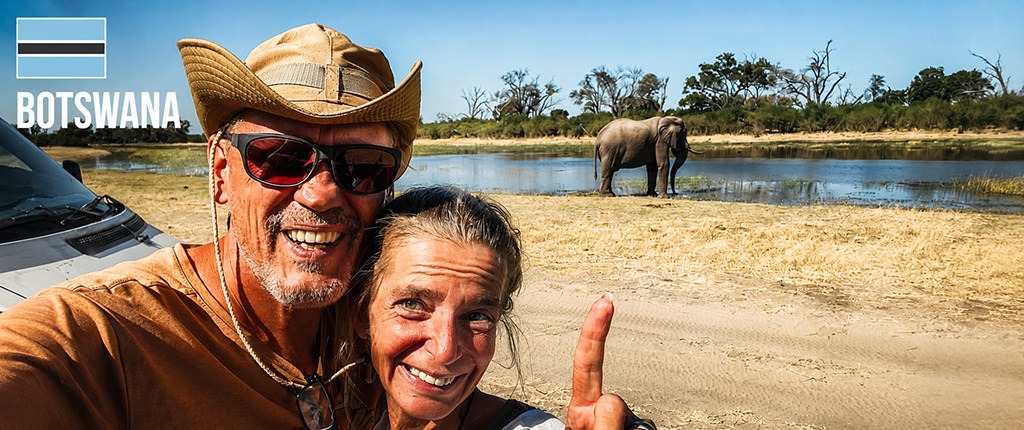
BOTSWANA 🇧🇼
Botswana became one of the biggest surprises of our entire African journey.
When we entered the country, we only planned to stay for a few days. There was no grand plan, no long bucket list and no expectation, that Botswana would become one of our favorite countries. Yet somehow, a few days turned into three months.
Unlike many other African countries, Botswana simply lets you travel. There is very little bureaucracy, almost no corruption and hardly any interference with your daily life. You drive, explore and enjoy the country at your own pace.
The real star of Botswana is its wildlife. Especially in the north around the Okavango Delta, animals are everywhere. Elephants casually walk through campsites, hippos appear where you least expect them and wildlife encounters become part of everyday life. Unlike many places where nature feels managed and controlled, Botswana still feels genuinely wild.
Landscape-wise, Botswana is not as dramatic as Namibia or Lesotho. You will not find endless mountain ranges or spectacular coastal scenery. Yet the country has something equally valuable: space. Endless open spaces. Vast pans. Quiet camps. Empty tracks disappearing into the horizon. It is a country, that grows on you the longer you stay.
Most importantly, Botswana gave us something, we had been missing for a long time: the feeling that travel itself was fun again.
Our Personal Highlights: Khwai River, Kazuma Pans, Kubu Island, Kukonje Island, Makgadikgadi Pans.
Our Personal Downsides: None. We even finally got Starlink here.
Our Personal Feelings so far: This is how African overlanding should feel. Freedom, safety, wildlife, friendly people and very little bureaucracy. If Botswana had a bit more epic scenery, it would probably be close to perfect. For us, Botswana is an overlander’s dream.
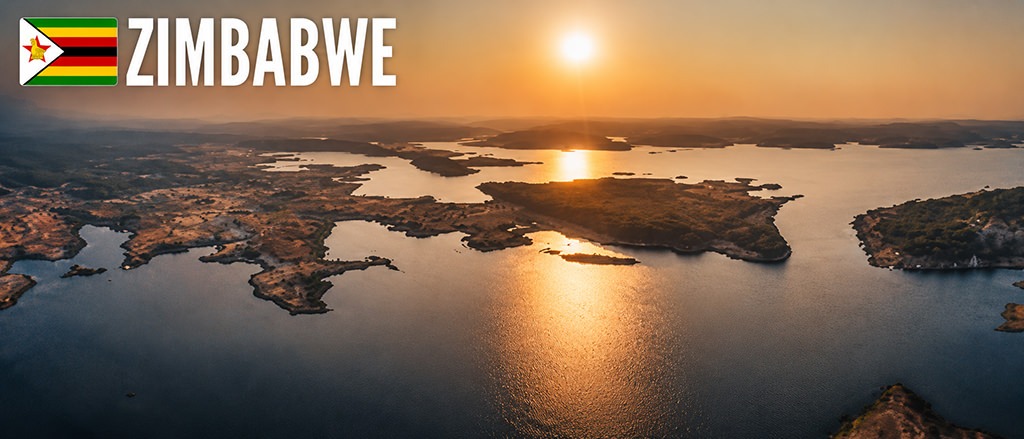
ZIMBABWE 🇿🇼 – Blew us away!
Zimbabwe took everything we already loved about Botswana and added another layer of adventure.
The freedom was extraordinary. Wild camping was not just possible, it was often spectacular. Night after night we found beautiful spots without fences, without restrictions and without somebody telling us, where we could or could not stay. After countries, where every square meter seemed to belong to someone, Zimbabwe felt refreshingly open.
What really surprised us was the diversity. One day we were overlooking the vast waters of Lake Kariba, the next day we were fighting our way along the infamous Binga Road, shaking Rossi to its limits. Then came Hwange National Park with wildlife encounters, that left us speechless and later the green highlands around Nyanga. Zimbabwe constantly managed to reinvent itself.
The country also arrived at exactly the right moment. The rainy season had not fully taken hold yet, temperatures were pleasant and many tracks were still accessible. Combined with affordable national parks and generally friendly people, travelling here felt easy and rewarding.
Of course, not everything was perfect. We caught a thief red-handed and had a rather annoying encounter with two female police officers. But compared to everything else Zimbabwe offered, those moments were little more than footnotes.
By now, we had already travelled through many countries and experienced all kinds of highs and lows. Zimbabwe reminded us why we started this journey in the first place.
Our Personal Highlights: Lake Kariba, the absolutely brutal Binga Road, Hwange National Park, Nyanga National Park.
Our Personal Downsides: Apart from the attempted theft and two particularly annoying police officers: none.
Our Personal Feelings so far: This is exactly how we hoped Africa would continue. Freedom, adventure, stunning landscapes, fantastic wild camping and just enough challenges to keep things interesting. Together with Botswana, Zimbabwe gave us the best time of our entire journey so far, but we’ll see, what comes next 😉
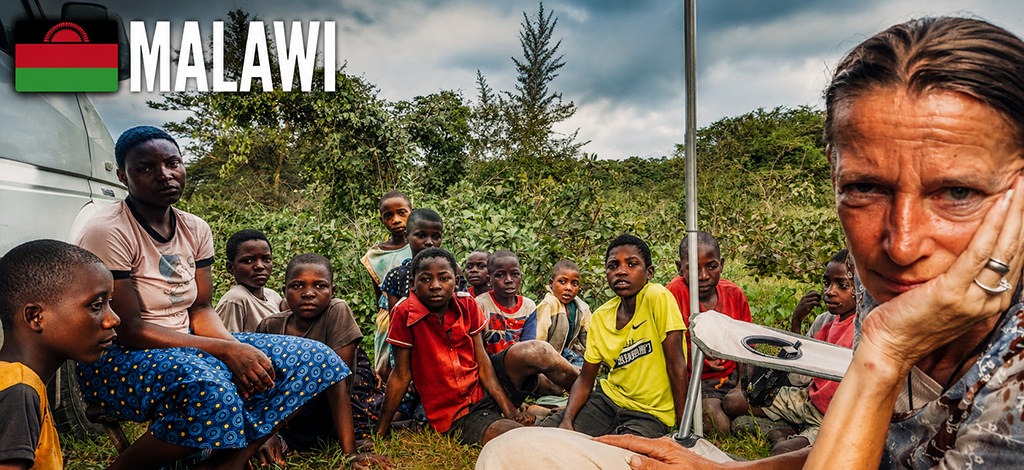
MALAWI 🇲🇼
Malawi was not really fair to us. By the time we entered the country, the rainy season had fully caught up with us. Floods, storms and weather-related disasters were affecting large parts of southern Africa. Hundreds of thousands of people had to be evacuated across Mozambique, Malawi, Zimbabwe, Zambia, Botswana and South Africa. Many roads became difficult or impossible to use and several places we had hoped to visit, simply weren’t accessible anymore.
Lake Malawi was undoubtedly beautiful and became the main highlight of our stay. Apart from that, we honestly did not see enough of the country to form a complete opinion. The landscape never struck us as particularly ugly, but neither did it leave a lasting impression. Rain, mud and some of the worst roads of the entire journey dominated much of our experience.
What affected us most was the sheer number of people. Again on this trip, we felt, that we were just never ever truly alone. Whether on roads, in villages or trying to find a place to stop – there were always people around. Constant staring and the endless calls of “Mzungu” followed us almost everywhere. It was here, that we really felt East Africa beginning.
The people themselves were generally friendly and we never experienced problems with officials or police. On the contrary, officers were polite, relaxed and completely free of corruption in our experience. Communication was often difficult due to limited English, but friendliness was rarely an issue.
As the weeks passed, we increasingly moved towards campsites and lodges, instead of searching for remote wild camps. Partly because of the weather, partly because solitude had become almost impossible to find.
Our Personal Highlights: Lake Malawi
Our Personal Downsides: Rainy season, flooding, difficult roads, extremely high population density, very limited opportunities to be alone, surprisingly basic food supply.
Our Personal Feelings so far: Malawi arrived at exactly the wrong time for us. The weather limited, what we could see and the constant presence of people became mentally exhausting. We left with mixed feelings. Not because the country treated us badly, but because circumstances prevented us from experiencing much of what Malawi probably has to offer.
Rain still sucks!

TANZANIA 🇹🇿
Tanzania never really managed to convince us. Part of that was certainly bad timing. The rainy season was still in full swing, many roads were in poor condition and progress was painfully slow. Adding to that, Tanzania has an enormous amount of truck traffic. On some stretches, especially towards Dodoma and Dar es Salaam, it felt like we were driving through a never-ending convoy of heavy trucks.
Another thing that stood out, were Tanzania’s endless speed controls. Combined with the huge amount of truck traffic and long stretches of solid center lines, overtaking often became frustratingly difficult. For the first time in more than 40,000 kilometers across Africa, we were repeatedly stopped for alleged speeding offences.
Fortunately, we had developed a simple response:
“Could we please see the laser calibration certificate?“
That sentence became our best friend in Tanzania and every time we were eventually allowed to continue, without paying anything.
On top of all that: a thing that drove us absolutely insane, were the countless speed bumps and rumble strips. And we’re not talking about the normal kind (like in nearly all parts of Africa)
Many of them were so excessively high, that we constantly worried about damaging the underbody, suspension or even the axles. On some roads, where driving fast was physically impossible anyway, due to potholes and poor surface conditions, the sheer number and size of these obstacles felt completely absurd.
What made matters even worse was, that many weren’t marked at all. More than once we hit them unexpectedly and bottomed out. Every impact made us wonder, whether something underneath the vehicle had just bent, cracked or shifted.
Over time, it became mentally exhausting. Instead of enjoying the scenery, we often found ourselves scanning the road surface every second, searching for the next unmarked obstacle.
Ironically, these speed bumps often caused more stress, than the roads themselves and they played a significant role in turning both Tanzania and later Kenya into far less enjoyable experiences, than we had hoped for.
The people were generally friendly and officials were among the most relaxed we met. Police checkpoints were frequent, especially with speed controls, but every encounter remained friendly and often ended with laughter, instead of fines. Corruption was practically non-existent in our experience.
The coastline, which many travelers rave about, left us rather unimpressed. Away from a few highlights, much of the country felt like endless bushland with rolling hills. Not ugly, but rarely spectacular. At least not on the route we travelled.
What became increasingly exhausting, was the constant attention. Wherever we stopped, the familiar calls of “Mzungu” followed us. People stared, shouted after us and watched everything we did. Not hostile, just relentless. After months on the road, our tolerance for that had become rather limited. Mine was basically gone.
The biggest shock, however, was the pricing of the national parks. Tanzania undoubtedly has some of Africa’s most famous wildlife destinations, but the costs are staggering. Once vehicle fees, park fees and conservation fees are added up, a single national park visit can easily cost around 500 USD for two people and one vehicle per fucking day. Considering how many parks Tanzania offers, this quickly moves beyond, what many long-term overlanders consider reasonable.
In the end, Tanzania became more of a transit country for us. We pushed northwards faster than originally planned and found ourselves looking forward to Kenya.
Our Personal Highlights: Friendly police officers, some beautiful stretches along the route, surprisingly relaxed checkpoint experiences. Oh, I remember: The Dodoma Region is quite nice.
Our Personal Downsides: Endless truck traffic, speed bumps and rumble strips. rainy season, poor roads, extremely expensive national parks, constant attention from people, uninspiring coastline.
Our Personal Feelings so far: Tanzania simply wasn’t our country. Maybe different weather, different routes or a bigger budget for the parks would have changed our opinion. But during our visit, we mostly found ourselves wanting to move on and reach Kenya as quickly as possible.
Final Words: We hate the word “Mzungu“… we just hate it sooo much!
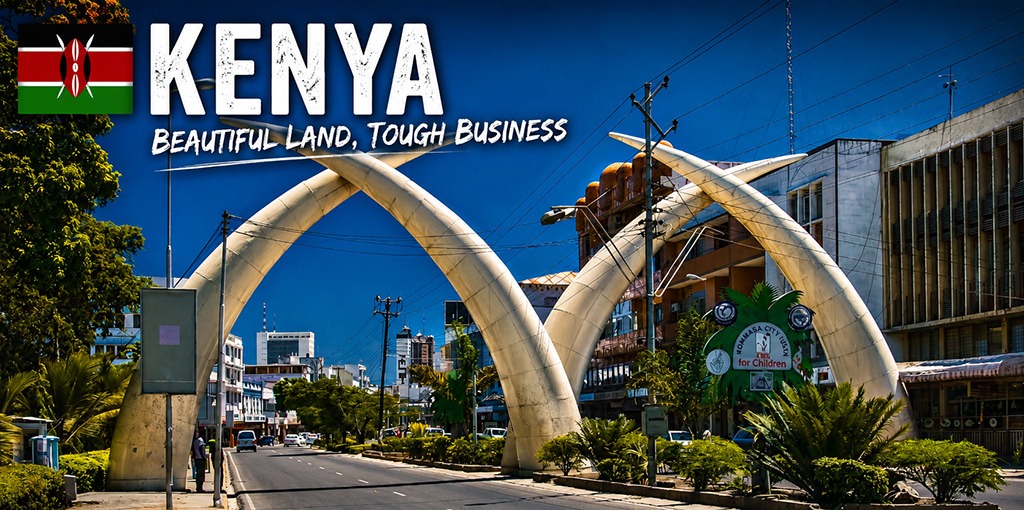
KENYA 🇰🇪
Kenya was a country we deliberately wanted to revisit.
Back in 2009, our journey through Kenya felt more like a survival trip, than a holiday and cost us an absolute fortune. Fenny never wanted to return. I did. Kenya deserved a second chance.
Unfortunately, it didn’t use it.
By the time we arrived, the rainy season was still at its peak. Roads turned into mud pits, tracks became rivers and our already struggling vehicle suffered further damage, when the rear axle shifted during one particularly ugly mud battle.
Wild camping was possible here and there, but never easy. There were people almost everywhere. Constant attention, endless “Mzungu” yellings and little moments, where you simply wanted to be left alone.
What struck us most, was the relentless focus on money. Kenya was another, but the hardest country on this journey where we constantly felt like walking ATMs. Whether it was campsites, restaurants, mechanics, batteries-stores or simple purchases, prices often seemed to depend entirely on the color of your skin. We learned very quickly to agree on every detail and every price upfront.
Then came the bureaucratic mess.
Despite carrying a valid Carnet de Passages, Customs issued us a TIP instead of processing the FVP (Foreign Vehicle Permit) correctly. From that moment on, nobody seemed to know what to do. No office could tell us how to extend it. Different officials gave different answers. Phone calls led nowhere.
At one point, we were told to pay around 200 USD for somebody to ride a motorcycle somewhere and sort out the paperwork. Even locals laughed and told us, this made absolutely no sense.
The story nearly ended at the border, where officials wanted to fine us, because of the unresolved FVP issue. Fortunately, we had documented everything and could prove, that the mistake had not been ours. After lengthy discussions, we were finally allowed to leave.
It perfectly summed up our experience: confusion, contradictions and nobody taking responsibility.
The shipping process pushed us even further in the wrong direction. Vague answers, vague prices, changing information and an attitude of “don’t be difficult” whenever questions became too specific.
“Hakuna Matata“
We heard countless stories from other travelers about corruption, officials and endless bureaucracy. Fortunately, we avoided most of that ourselves, but by then our decision had already been made.
We left Kenya without doing any real sightseeing.
For the first time in a very long while, we simply didn’t feel like exploring anymore.
Our Personal Highlights in the past: Tsavo East National Park, Tsavo West National Park, Lake Nakuru, Lake Naivasha, Hell’s Gate National Park, Mount Kenya, Nanyuki Equator Point, Amboseli National Park (when prices were still reasonable).
Our Personal Downsides: Endless rain, overwhelming truck traffic, again this million of speed bumps and rumble strips, inflated tourist pricing, constant Mzungu shoutings, bureaucratic chaos, shipping frustrations, difficult business dealings and the general feeling of being viewed primarily as a source of money. Tumbu flies: living larvae in our bodies for weeks. How disgusting this was.
Our Personal Feelings so far: Sometimes a country deserves a second chance. Sometimes it confirms your first impression. For us, Kenya was the latter. By the end, there was only one thought left: the ship is full. Time to leave asap!
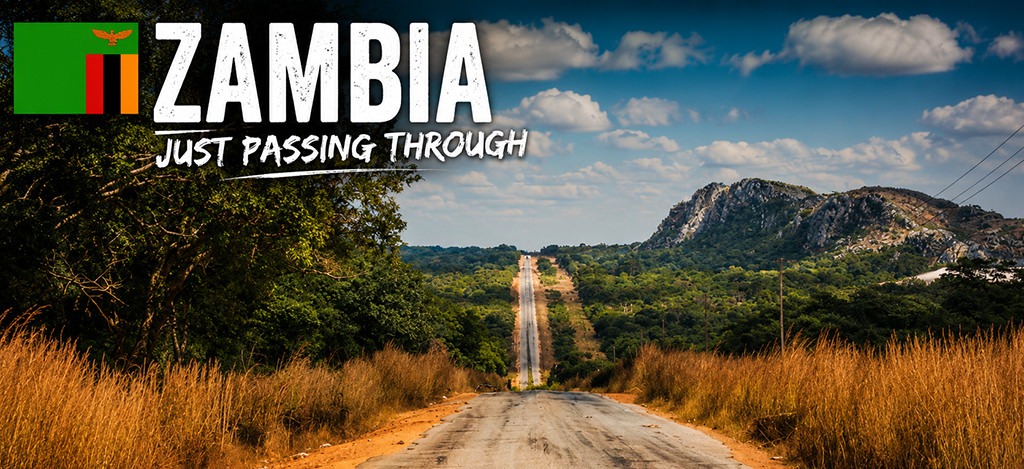
ZAMBIA 🇿🇲 – Our last country for now
Zambia wasn’t really part of the plan anymore.
By the time we entered, the world around us seemed to be accelerating. Conflict in the Middle East had escalated, fuel prices were rising rapidly and reports about Ebola outbreaks in Uganda and the DRC were spreading. For us, the decision became obvious: skip Uganda and Rwanda and head straight back south.
Our last realistic chance to ship Rossi, was waiting there. Otherwise, it would have meant thousands of kilometers all the way back up the West Coast – something we definitely didn’t want to do.
So Zambia became less of a destination and more of a transit country. That is a bit unfair, because we simply didn’t spend enough time here to judge the country properly.
What we saw, were generally friendly people, little hassle and a country, that felt calmer than many others around it. But we were travelling with tunnel vision by then. The goal was no longer exploration. The goal was getting south as quickly as possible.
The first impression wasn’t exactly encouraging. The border crossing from Tanzania turned into one of the most chaotic and confusing border procedures, we had encountered in years. Paperwork, counters, waiting and plenty of opportunities to wonder, what exactly was going on.
Once inside the country, progress remained slow. Large sections of the roughly 1,500 kilometers we travelled ranged from poor to absolutely terrible road conditions. Only towards the south-west did things improve significantly.
Apart from that, much of what we saw, consisted of endless bushland, interrupted by towns and a handful of famous national parks. Unfortunately, we neither had the time nor the mindset to explore them properly.
Looking back, Zambia is probably one of the countries we understand the least. And for that reason, we don’t want to do it an injustice.
Our Personal Highlights:
The friendly atmosphere, surprisingly uncomplicated encounters with officials, excellent wild camping and the smooth transition into Botswana after a rather chaotic entry.
Our Personal Downsides:
One of the most chaotic border crossings of the entire journey, long stretches of very poor roads and the fact that circumstances left us little opportunity to properly experience the country.
Our Personal Feelings so far:
Zambia may well deserve more time than we gave it. Unfortunately, timing is everything. We arrived focused on world events, shipping logistics and changing travel plans. Sometimes a country simply appears at the wrong moment in a journey.
At least the weather was finally improving. The rainy season was almost over and for the first time in quite a while, we could look forward to blue skies again.
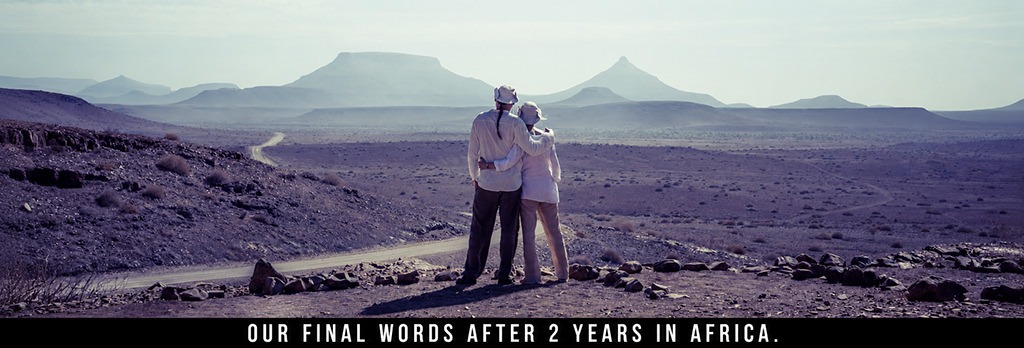
Final Words – “The Bottle We never opened”
I (Totti) have been sitting with this final post for three days now, reading it over and over again🤯.
And while most of the text above was indeed written by AI under my clear instructions and based on our diaries, I simply couldn’t make it work, when it came to my “final words”.
So here we go:
How do I put into words two years, that were simultaneously so beautiful and so exhausting? How do I describe a continent, that gave us so much, yet also pushed us to our limits – without sounding too negative or overly romantic?
We’ve been traveling for nearly 20 years, visited 94 countries and driven more than 475.000 km behind our own steering wheels. We’ve seen so much, experienced so much and taken countless memories with us… but Africa… Africa is different.
Since 2006 we’ve been to Africa seven times. Two of those years we lived on the continent.
We’ve traveled through 25 countries – each one incredibly beautiful in its own way, yet somehow sharing the same intense spirit. Everywhere you go you find warm, friendly people, vibrant colors, soulful vibes and always pure nature.
At the same time, there’s this constant, often absurd chaos, that cuts into our nerves with a chainsaw, meter by meter, hour by hour. A level of chaos, that can be so relentless, it slowly wears you down, kilometer after kilometer.
As I reread this enormous report again and again and reflect on, what truly matters to us as overlanders, some questions keep coming back:
Where were all those perfect wild camps, that deep sense of freedom, we usually chase?
Where were the endless golden-hour photography sessions and the heartwarming encounters we love so much?
They existed – of course they did – but they were far fewer and farther between, than the challenges, that wore us down so often. The harmony between the “good” and the “difficult” was rarely balanced.
We often caught ourselves trying to make lemon juice out of lemons instead of genuinely enjoying the day.
We moved too fast. Not because we wanted to, but because of all these circumstances, that constantly had us under pressure. By the end – even when things calmed down in Angola – we were already exhausted – mentally and emotionally drained.
And there I go again – sounding negative. That’s not what I want!
What we missed most was: balance.
The kind of balance, where you can spend hours overlooking a waterhole, watching animals compete for dominance. Where you wait for sunset, because you know the light will be perfect for photography. Instead, there was often pressure. The next payment period in the National Park was approaching. Another campsite had to be found – in hope of finding peace and silence.
I missed photography enormously… these meditative moments, where I am with me… alone, controlling my breath for the next beautiful animal encounter to capture.
And yet, just when things became too much, I kept hoping, Africa would give something back. Another unforgettable encounter or another act of kindness… another landscape – so spectacular, it justified every kilometer.
I don’t know whether it’s our travel style, our expectations or whether we’ve simply seen so much of the world, that we’re harder to impress than we once were.
We made one clear mistake in Africa: we never allowed ourselves real breaks.
For two years we were constantly on the road, in the bush or surrounded by people. No real pause or just a tiny bit of distance. In hindsight, we should have taken a proper break after six months or so – flown somewhere else, reset and returned with fresh energy.
Instead, our fighting spirit took over. We didn’t want to give up. We didn’t want Africa to “beat” us.
The truth is that we love Africa deeply. Yet Africa often made life difficult for us. Eventually, we had to accept, that Africa simply isn’t designed for our style of travel.
Africa is incredibly demanding.
It taught us, that this continent asks for a different pace and approach, than what we were used to, from the rest of the world.
As tourists – flying in, renting a car, staying in lodges and booking safaris – Africa is and will be magical and unforgettable.
As long-term overlanders with our own vehicle, it was often much harder than we had anticipated.
Africa was also considerably more expensive than we had anticipated. That was something, we obviously had completely underestimated. Eventually, all those influences accumulate, until they become overwhelming, yet escaping them isn’t easy. We didn’t have the luxury of simply booking flights and taking breaks, whenever we wanted. And we never wanted to leave our vehicle behind.
And then there was this one moment we had been waiting for – the one that never came.
For six years of full-time travel, a 20-year-old bottle of our favourite wine has travelled with us: a “Piesporter Goldtröpfchen Auslese”.
This bottle had accompanied us through more than fifty countries. Across deserts, across the most rugged terrain, over mountains and across countless borders – sometimes even quietly smuggled. It was our silent promise to ourselves.
It wasn’t about the value of the wine, but it was meant to be opened on that perfect day – at an epic wild camp, during a magical sunset, in that rare feeling of “We’ve made it.” A moment of pure freedom and fulfilment.
After two years in Africa… it was still unopened.
Not even in South Africa – the country we had always imagined as the perfect place for this very moment. Because South Africa was the first country, Fenny and I ever travelled together – many years ago, when we were young and full of dreams.
That the bottle remained sealed at the end of this long African journey, hurt more than we expected. It became a quiet symbol of what we missed most here: not comfort, luxury or even the big adventures – but the deep, peaceful freedom to simply stop and say:
“Here. Now. This is our moment – This is perfect.”
Africa was perfect in its own way, but it wasn’t perfect for us. As an overlanding destination, it simply wasn’t the right fit for us.
But hey… that’s perfectly ok… it will be perfect for others, while we’re leaving with a heavy heart, but a grateful one🙏.
We will be back. Absolutely. Just differently.
Cheers
Totti (TRAVELcandies-On-Tour)
FAQ - Frequently Asked Questions
Is Africa really an overlanding paradise?
For some people, absolutely. If you have a vehicle stored on the continent and can return regularly for a few weeks or months at a time, Africa can be an incredible destination.
For us, however, after a very long journey across the continent, the answer is no.
The reasons are simple: some of the worst, at times horrific traffic, excessive bureaucracy, high costs, long waiting times, high population density in many regions and surprisingly few opportunities to simply turn off the road and discover something unexpected. Most tracks exist, because there is a practical need for them and following them, often leads either into simply just bush or to yet another compound. Add to that the challenges of food supply, medical care, access to cash, reliable drinking water, waste disposal, private land, fences, frequent police and military checkpoints and the constant reality of people asking for money or gifts.
Then there are the less glamorous aspects of daily life: mosquitoes, biting flies, parasitic insects, seasonal rains, that can make tracks impassable for weeks or months, huge amounts of litter and widespread land-clearing fires. More than once, we found ourselves camping peacefully, only to discover, that somebody had started burning the surrounding area around us.
What surprised us most was that, despite all of this, we found relatively little of the kind of true epicness and freedom, that we personally seek in overlanding.
In our opinion, destinations like Chile, Argentina, Iran, Saudi Arabia or parts of the Silk Road offer significantly more value for long-term overland travel.
That is not a universal truth. It is simply our experience and our opinion after crossing Africa from north to south to east.
Sounds like a list of complaints, doesn’t it? Yes, perhaps it does.
Is it the “uncomfortable truth” or just “beautiful chaos?, now?
It’s up to you what you make of it. 😉
Is Africa dangerous?
I’m honest and would say, that Germany might be more dangerous in certain cases. Sometimes we felt a bit more “unsafe”, due to what people told us. At the end of the day we were really safe, but…
… we do not want to gloss over one fact – and many South Africans do not like hearing this:
Six of the most dangerous cities in the world are located right here in South Africa. There is a reason why this country has more fences, walls and barbed wire, than any other country on Earth.
Crime rates are often extremely high and – in many categories – significantly higher than those in the United States. While we never felt completely unsafe, the perception of danger was constantly reinforced by South Africans themselves. Time and again, we were warned about where not to go, when not to drive, where not to stop and what not to do.
Apart from the fact, that it happened more than once, that people tried to steal something out of our car.
In many ways, it was not the crime itself, that shaped our experience, but the ever-present awareness of it.
Would you do this journey again?
No! Not in this way. Driving the western route will be a one-time experience for me, but yes, I definitely wanna come back to Africa. Next time by shipping though.
What was the worst experience on your journey through Africa?
In Cameroon, when we got harrassed by a drunken brigadier general at 2am. , who used physical force to prevent me from getting dressed and entering my van.
What was your favorite country and why?
Botswana, Zimbabwe and Lesotho, in terms of freedom, overlanding abilities, landscapes and people. But there is not THE ONE 😉
Which country surprised you the most?
Definitely Nigeria. The country where we found, it might be most dangerous, but had the greatest and most funny people of all.
Which country disappointed you the most?
Unfortunately South Africa, as it is not anymore the country we left 20 years ago.
How much corruption did you experience?
To be honest: a lot, even though I wrote here and there, that corruption was less in certain countries. Yeah, it was, nevertheless it was present nearly every single day.
Read here, how we dealt with it.
Did you ever pay bribes?
Not a single cent.
Read here, how we dealt with corruption
What was the biggest misconception you had before entering Africa?
“Africa is poor and people are starving”. This may be the case in the Sahel zone like Sudan, Ethiopia and others, but definitely not in these countries, where we’ve been traveling.
Poverty is always a matter of perception and once we learned it, we adjusted this misconception.
What was the hardest part of the journey?
Bureaucracy and road conditions. The first one is very often totally absurd, the second topic is connected to permanent anxiety about your car being damaged.
What was the biggest mistake you made?
Not having been able to see the condition of the cameroonian brigadier general, when he was drunk. If I would have known, I would have deescalated the given situation pretty fast, but in this case, I certainly started to play the bad guy… BIG mistake
How much money did you spend?
As for now, we didn’t fully calculate the whole costs of our Africa journey yet, but will soon.
Meanwhile you can read here, about our Overlanding costs (incl. Western Africa).
What we definitely can say is, that it was our most expensive journey so far.
Which vehicle would you recommend for Africa?
There is no perfect vehicle for Africa, but over the years we have travelled with different setups, including a Jeep Wrangler with a rooftop tent, various other capable off-road vehicles and, of course, Rossi, our Mercedes Sprinter 4×4. We also spent countless months travelling alongside expedition trucks, pickups with camper bodies and all kinds of overland rigs.
All of them worked.
That said, if we had to choose again, we definitely would pick our Sprinter 311 CDI (903) 4×4 without hesitation.
For our style of travel, it offers the best balance between comfort, size, off-road capability and practicality. Expedition trucks provide more living space and often more safety, but throughout Africa they are frequently too large, too heavy and too restrictive. Rooftop tent setups are far more agile, but they require you to live outside all the time.
A van sits somewhere in between.
The difference sounds small until you experience it yourself: when the weather turns ugly, when people gather around your vehicle or when you simply need a quiet evening, you close the door and instantly have your own private space.
As for four-wheel drive: yes, you can absolutely cross most of Africa without it.
Would we do it without 4×4?
Never.
Most of the time you won’t need it. But when you do, you really do. Whether it is deep sand in Botswana, muddy tracks during the rainy season or simply that extra margin of safety when conditions deteriorate, we would never voluntarily give up four-wheel drive again.
Along the way, we met plenty of travellers driving far more expensive and sophisticated vehicles, that suffered significantly more serious problems. Some spent weeks waiting for parts. Others spent fortunes on repairs.
That experience reinforced our belief that simplicity matters.
The OM611 Sprinter is not glamorous. It is not the most powerful vehicle. It is not the most modern, but it is simple, robust, highly repairable and parts are often surprisingly easy to find as well as very inexpensive..
That is one of the main reasons why we intend to keep travelling with this particular Sprinter for as long as possible.
Sometimes the best overland vehicle is not the most impressive one – it is the one that quietly gets you home.
Is a 4x4 necessary?
Absolutely not!
Apart from the fact, that we drove in 4×4 mode maybe 1% of the time, we also travelled with several people in 2WD vehicles. Even many locals can’t afford 4x4s and drive regular cars instead. We saw everything from Renault Clios and similar small cars to old sedans on these roads without any major issues.
What matters far more, is decent ground clearance and a good set of tyres. Four-wheel drive and diff locks are nice to have, but they’re only really an advantage in a few places, that would otherwise be inaccessible.
Did your vehicle survive Africa?
Yes, it survived and much, much better, than I ever imagined:
Over two years in Africa, Rossi gave us remarkably few problems. We had a broken gear linkage, a failed camshaft position sensor, a bent belt tensioner, a shifted rear axle after a particularly rough mud section and a wheel bearing failure, that was ultimately caused by one of my own installation mistakes.
Why wasn't wild camping that easy?
It is and will be easy if you do expect nothing in terms of epicness. Whether it’s a parking lot at a church or a picnic area anywhere along the road.
These ones are kinda easy to find.
But for the real epic shit: No… it wasn’t easy at all.
What about the rainy season?
In short: nobody never ever likes to drive it… and if: either they’re lying or they really having fun with not finding camp spots, permanently driving through water and mud filled potholes, sometimes bigger than a small car.
Rain season in Africa is the hell on earth and even the locals will tell you 🙂
Which border crossing was the worst?
Most of them have been kinda pain in the ass, even though some (less) of them have been pretty straight forward and smooth.
The last one I remember, was the one from Tanzania to Zambia. Holy hell, what a mess of dellusion 😉
Which people were the friendliest?
Really all african people have been friendly, no matter what, but the funniest and kindest have been in Nigeria.
What was the most beautiful place in Africa?
TOP OF THE WORLD Viewpoint in Zimbabwe, Blyde River Canyon in South Africa, Fishriver Canyon in Namibia and Kazuma Pans in Botswana.
What was the most difficult country?
In terms of getting the VISA: Nigeria.
In terms of corruption: Guinea and maybe Nigeria (if you do not know, how to handle them)
In terms of overlanding/wild camping: Def. South Africa.
In terms of food availability: Malawi (and some others)
In terms of National Park prices: Tanzania
In terms of car importation: Kenya
and so on, and so on.
You see, it’s difficult to name THE most difficult one. Every single country has its difficulties.
What was the most overrated country?
South Africa, Tanzania, I’d say
What was the most underrated country?
Definitely The Gambia, Lesotho and Zimbabwe
What was the kindest and also most absurd thing, happened to you?
The kind one:
At Diani Beach in Kenya, a Maasai warrior once tried to sell me his handmade weapons. I explained to him, why I couldn’t buy them or take them along. Surprisingly, after a while, he understood and didn’t push further – something really rare. We continued talking and he shared, that he was soon getting married. The next morning, he returned – not to sell anything, but simply to give me a hug, wish me well and say goodbye. That simple act of kindness stuck with me.
The absurd one:
On the other hand, in Lesotho, I had one of the most absurd encounters. At a viewpoint, a van of local tourists arrived. One man, clearly well-fed and about 120 kilograms, walked straight to me and mimicked the gesture of hunger – hand to mouth, sad face, nearly mimicking crying. I was stunned. I asked if he was seriously claiming hunger or wanna joke me. Without hesitation, he nodded and kept at it. I stood speechless, trying to comprehend the sheer absurdity.
We’ve got tons of those stories to tell, one wouldn’t believe and in the end, it’s exactly these moments – whether absurd, heartwarming, or challenging – that make a journey unique and stay with you for a long time.
What advice would you give somebody planning a similar trip?
Read our posts and watch our videos on Youtube 😉
Speak to others whom you trust and do not fall into the trap of too sugarcoated speeches.
People tend to make Africa much, much nicer than it actually is (if you do not know, HOW to enjoy its beauty).
You also might enjoy or find our TRAVELmap helpful, as a lot others did.
Don’t just set off blindly without doing at least some planning. Many travellers end up cutting their journeys short because of it and that’s a real shame.
What was the most uncomfortable truth you learned about Africa?
- Development aid is fundamentally flawed.
- People are not starving.
- Africa is really expensive.
- To many Africans, white people are seen as walking ATMs.
- Africans may be friendly, but not all of them are kind.
- Africa is “not” an overlanding continent.
- Africa could be incredibly rich, yet the combined GDP of all 54 African countries is still smaller than that of France alone.
In which countries you had the best overlanding experience?
Even though it has nothing to do with Africa, we definitely enjoyed overlanding in Chile, Argentina, Turkey, Saudi Arabia, Oman and the Iran.
But in terms of Africa: Botswana, Zimbabwe and parts of Namibia.
Would you recommend to visit Africa?
Ohhhh yes… definitely.
Whether for a short-term trip or even a long-term journey with proper planning and a reliable vehicle, Africa can be an amazing overlanding destination.
The thing is: people and travellers are very different. Many absolutely love overlanding in Africa, while others simply don’t. That’s something we had to learn along the way.
We personally enjoyed our time there, but looking back, our approach may not have been the best one.
Would we do it again? Absolutely.
As long as I never have to drive the western route again. 😂
Would you recommend to drive the Western Route?
That’s not an easy question, as it depends heavily on your mindset, resilience and motivation.
I would say: yes… if only for the satisfaction of having completed one of the toughest overland routes you can drive. Many consider it the ultimate challenge.
The route was never quite as difficult as we had expected, but it certainly wasn’t easy either. Mentally, it can be extremely demanding and stressful at times. That said, it is far from impossible and those who enjoy this kind of travel will likely feel right at home.
Without any prior travel experience, however, I might advise against it.
Everything can go right, but nothing has to.
“Africa’s not for Pussies” 🤷♀️😉
(wasn’t me, who said it, but locals did)